Mouth Breathing: The Hidden Reason You Wake Up Tired, Achy, and Unrested
Many people believe poor sleep only comes from stress, long work hours, or using phones too much before bed. But one hidden pattern we often notice at All Well Scoliosis Centre is something much simpler:
Sleeping with your mouth open.
A surprising number of patients come in complaining about:
-
Restless sleep
-
Waking up feeling exhausted
-
Body aches in the morning
-
Frequent headaches
-
Vivid dreams or dreaming excessively
-
Neck tightness and jaw tension
-
Feeling tired even after “sleeping enough”
At first, many think the problem is only muscular or postural. Sometimes we can improve the body mechanics, release tension, and improve movement in the neck and spine. But when symptoms keep returning, we start looking deeper.
One common pattern we often observe is mouth breathing during sleep.
Why Mouth Breathing Matters More Than Most People Realize
Your nose was designed for breathing.
Your mouth was designed mainly for eating, speaking, and helping release carbon dioxide quickly during intense exercise.
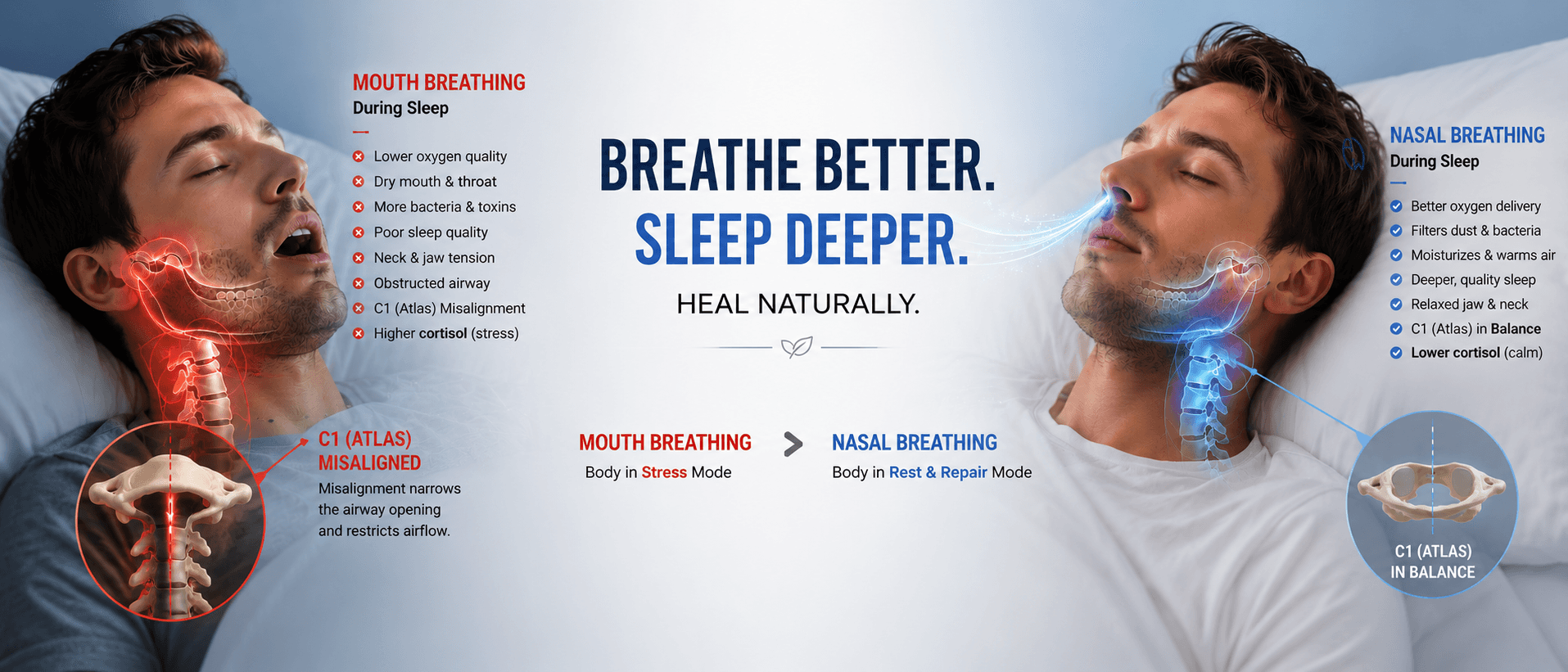
When you constantly breathe through your mouth — especially during sleep — your body may not fully enter a calm and restorative resting state.
The Nose Has Important Jobs
Your nose helps:
-
Filter dust, allergens, and bacteria
-
Warm and humidify the air
-
Support healthy oxygen exchange
-
Help regulate breathing patterns
-
Support nervous system balance
The tiny hairs and structures inside the nose act like a natural filtration system. When breathing shifts mainly to the mouth, that protective function is reduced.
This may contribute to:
-
Dry mouth
-
Irritated throat
-
Poor sleep quality
-
Increased oral bacteria
Research supports that nasal breathing helps filter, warm, and humidify incoming air while supporting healthier airway function.
Mouth Breathing and Tension Around the Jaw & Upper Neck
In clinical practice, we often notice chronic mouth breathers may also present with:
-
Jaw tension
-
Forward head posture
-
Tight upper neck muscles
-
Increased tension around the upper cervical region
-
Poor sleeping posture
When the mouth stays open during sleep, the resting position of the jaw and surrounding muscles changes. Over time, this may contribute to muscular tension patterns around the head, jaw, and neck.
Even after treatment, some people may continue experiencing recurring tightness or headaches if the breathing habit itself is never addressed.
It is important to note that while clinicians may observe these patterns, there is currently limited direct scientific evidence proving mouth breathing directly causes atlas (C1) misalignment.
Why Some Mouth Breathers Wake Up Feeling Unrested
Healthy sleep should allow the body to shift into a “rest and repair” mode.
But disrupted breathing patterns during sleep may affect how deeply the body rests.
Many chronic mouth breathers report:
-
Light sleep
-
Frequent waking
-
Intense dreaming
-
Morning fatigue
-
Brain fog
-
Increased body tension
Research shows mouth breathing and sleep-disordered breathing are associated with poorer sleep quality and increased airway resistance during sleep.
Research also suggests poor sleep quality may influence stress hormone regulation, including cortisol activity.
Instead of waking refreshed, many people wake up feeling like their body never truly rested.
Signs You May Be a Mouth Breather
You may be a mouth breather if you:
-
Wake up with a dry mouth
-
Snore often
-
Sleep with your mouth open
-
Have bad breath in the morning
-
Experience frequent headaches
-
Feel unrested after sleep
-
Struggle with sinus congestion or allergies
-
Get cavities easily
-
Notice jaw tightness or teeth grinding
Children who chronically mouth breathe may also develop:
-
Poor posture habits
-
Restless sleep
-
Difficulty concentrating
-
Altered jaw development patterns
Mouth Breathing, Allergies, and Sinus Problems
Many people think allergies only cause mouth breathing.
But over time, mouth breathing may also worsen irritation and dryness in the airway.
This can create a cycle:
-
Nasal congestion develops
-
Mouth breathing increases
-
The mouth and throat become dry
-
Airway irritation worsens
-
Nasal breathing becomes more difficult
Many chronic mouth breathers also report:
-
Frequent sinus issues
-
Dry throat
-
Increased cavities
-
Gum irritation
-
Poor sleep quality
Research supports a relationship between nasal obstruction, allergies, and chronic mouth breathing patterns.
Mouth Breathing and Oral Health
Saliva plays an important protective role in the mouth.
Chronic mouth breathing may:
-
Dry oral tissues
-
Reduce saliva effectiveness
-
Change oral pH balance
-
Increase bacterial growth
Over time, this may increase the risk of:
-
Cavities
-
Gum irritation
-
Bad breath
-
Tooth sensitivity
Research has linked chronic mouth breathing with increased oral health problems and changes in the oral environment.
Why Nasal Breathing During Sleep Is Important
Breathing through the nose is associated with calmer and more efficient breathing patterns.
Nasal breathing may help support:
-
Better airflow regulation
-
Improved sleep quality
-
More balanced breathing mechanics
-
Better nervous system regulation
-
More restful sleep
Many patients who improve their nasal breathing habits report:
-
Sleeping deeper
-
Feeling more rested
-
Fewer morning headaches
-
Better energy levels
-
Reduced jaw and neck tension
Research suggests slower, more regulated breathing patterns may help support parasympathetic (“rest and repair”) nervous system activity.
In clinical observation, we also often notice less tension around the upper cervical region when patients develop healthier breathing habits during sleep.
What About Exercise?
During intense exercise, breathing out through the mouth can help release carbon dioxide more quickly when the heart is working hard.
That is completely normal.
But for breathing IN, nasal breathing is still beneficial whenever possible because the nose helps:
-
Filter incoming air
-
Warm and humidify airflow
-
Support more regulated breathing patterns
Your body was designed with this filtration system for a reason.
Can Mouth Taping Help?
Some patients report improved sleep quality when using gentle mouth taping to encourage nasal breathing during sleep.
At first, many people struggle because their body has adapted to mouth breathing habits for years. But over time, some report:
-
Feeling more rested
-
Less morning dryness
-
Reduced headaches
-
Better sleep quality
However, mouth taping is not suitable for everyone.
People with:
-
Severe nasal blockage
-
Sleep apnea
-
Breathing disorders
-
Chronic respiratory conditions
should speak with a qualified healthcare professional before trying it.
Experts also caution that mouth taping still requires more research and may not be appropriate for all individuals.
Final Thoughts: Be Mindful of How You Breathe
Breathing is something we do every second, yet many people never realize how much it may influence:
-
Sleep quality
-
Recovery
-
Energy levels
-
Nervous system balance
-
Jaw and neck tension
-
Overall well-being
While structural care and spinal mechanics are important, breathing habits during sleep may also influence recovery, sleep quality, muscular tension patterns, and nervous system regulation.
Sometimes recurring tension patterns are not only about posture or stress — but also about the habits your body repeats every night.
If you constantly wake up tired, achy, foggy, or unrested, it may be worth asking yourself:
Am I breathing through my nose… or my mouth?
Research References
-
Nasal breathing and airway function:
-
Mouth breathing and sleep quality:
European Respiratory Journal – Nasal vs Oral Breathing During Sleep
-
Sleep quality and cortisol regulation:
-
Mouth breathing and oral health:
-
Allergies, nasal obstruction, and mouth breathing:
-
Nasal breathing and nervous system regulation:
-
Mouth taping considerations and safety: