When scoliosis curves start to progress, many patients and families feel pressured to believe surgery is the only way out.
With today’s advancements — like robotic-assisted spinal surgery and precise navigation systems — it’s easy to think that surgery is safer and more predictable than ever before.
But while technology has reduced human error, one truth remains: spinal fusion permanently changes how your body moves and feels.
Adele’s Story: “I Thought Surgery Would End My Pain — But It Changed Everything.”
Adele had her scoliosis surgery on her 21st birthday. Her curve had been worsening, and her surgeon warned that it might soon press on her organs — affecting her lungs and digestion. Out of fear, she agreed to surgery, believing it was the only way to stop her condition.
The procedure went smoothly — robotic-guided and precise. But recovery revealed another side of the story.
“I didn’t realize how heavy my back would feel. I can’t bend down easily. My neck gets tired really fast. My hips always ache, and lying down is always the best option. I can’t dance anymore — even simple things like baking or cooking are hard.”
Now in her late twenties, Adele came to All Well Scoliosis Centre looking for hope beyond surgery — something that could help her feel strong and flexible again without further medical intervention.
The Reality of Scoliosis Surgery: The Pros and Cons You Need to Know
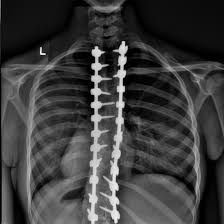
Scoliosis surgery — typically a spinal fusion using rods, screws, and bone grafts — can correct severe curves, but it comes with long-term consequences that patients must understand.
Pros of Scoliosis Surgery
-
Stops curve progression in severe cases (typically above 45–50° Cobb angle).
-
Improves spinal alignment and overall appearance.
-
Can relieve organ compression caused by severe spinal rotation.
-
Robotic and navigation-assisted techniques improve accuracy and safety. (Mayo Clinic)
Cons of Scoliosis Surgery
-
Loss of flexibility: The fused section no longer bends or twists. Movement like dancing, yoga, or bending to tie shoes becomes restricted.
-
Muscle fatigue: Neck, hip, and surrounding muscles overcompensate, leading to chronic tension and stiffness.
-
Long recovery: Full recovery often takes 6–12 months or more.
-
Complications: Risk of rod breakage, infection, or adjacent segment degeneration. (Hospital for Special Surgery)
-
Emotional impact: Many patients struggle with body image and reduced activity freedom.
What We Recommend Instead: Corrective, Not Just Supportive, Care
At All Well Scoliosis Centre, our focus is restoration — not restriction.
We believe that whenever possible, scoliosis should be managed through functional, non-surgical methods that support the spine’s natural movement and alignment.
CLEAR Method
An evidence-based chiropractic protocol focused on spinal biomechanics, neuromuscular re-education, and corrective exercise.
Learn more: CLEAR Institute
A 3D custom-designed scoliosis brace that helps guide the spine toward correction while maintaining flexibility and function.
Together, these methods can help:
-
Reduce chronic pain and tension
-
Improve posture and spinal stability
-
Build core and back strength safely
-
Restore confidence in movement
Surgery Decision Checklist
-
Before deciding on scoliosis surgery, consider these questions:
-
Has your curve been confirmed to cause organ compression or breathing restriction?
-
Have you tried a targeted CLEAR or ScoliBrace program?
-
Do you understand the permanent mobility limitations after fusion?
-
Have you consulted with a non-surgical scoliosis specialist for a second opinion?
-
Are you emotionally ready for the rehabilitation and lifestyle adjustments that follow?
-
Have you spoken with others who have undergone surgery about their long-term experiences?
The Takeaway
Even with robotic precision, scoliosis surgery isn’t a guaranteed “end” to pain.
It can stabilize the curve — but often at the cost of flexibility and long-term ease.
If surgery can be avoided, it should be — especially when targeted non-surgical methods can deliver functional improvement and lasting comfort.
At All Well, we empower our patients through movement — combining science, precision, and care to help you live strong, confident, and well.