Scoliosis and Success: Athletes, Dancers, and Celebrities Who Prove Your Dreams Are Still Possible
For many people, hearing the word Scoliosis can feel overwhelming. Parents worry about their child’s future. Teenagers worry they may have to give up the sports, dance, or activities they love.
But the reality is very different.
With proper monitoring, personalised care, and the right rehabilitation approach, many people with scoliosis continue to pursue their passions at the highest level. In fact, some of the world’s most successful athletes, dancers, and celebrities live with scoliosis and still perform at elite levels.
Scoliosis does not have to limit your dreams.
It simply means your body may need a little more understanding, awareness, and conditioning.
What Scoliosis Really Means
Scoliosis is not just a sideways curve of the spine. It usually involves three-dimensional changes in the body, including:
-
Spinal curvature
-
Vertebral rotation
-
Muscle imbalance
-
Changes in posture and movement control
Because the spine connects to the nervous system, scoliosis also affects how the brain communicates with the body.
In simple terms, the brain may need to relearn how to balance and control posture.
That is why modern conservative scoliosis care often focuses on neuromuscular reconditioning, teaching the body how to move more efficiently.
Inspiring Athletes and Celebrities With Scoliosis
Many successful public figures have openly spoken about living with scoliosis.
Olympic Athlete
Usain Bolt, one of the fastest runners in history, has scoliosis.
His spinal curve created muscle imbalances that affected his stride, but through strength training and conditioning, he continued to dominate international sprinting.
His journey shows that the body can adapt with the right training and support.
Ballet Dancer
Misty Copeland, principal dancer with the American Ballet Theatre, trained and performed with mild scoliosis.
Ballet requires incredible spinal control, balance, and body awareness. Through strength training and conditioning, she developed the stability needed to perform at the highest level.
Actress Who Wore a Brace
Shailene Woodley was diagnosed with scoliosis at age 15. She wore a brace for about two years during her teenage years.
Today she is a successful actress known for films like The Fault in Our Stars and Divergent, showing that scoliosis during adolescence does not stop someone from achieving their dreams.
Strength Athlete
Lamar Gant had severe scoliosis yet became a world champion powerlifter and set multiple world records.
His story demonstrates that even with a significant spinal curve, strength and performance are still possible.
Why Understanding Your Body Is So Important
Scoliosis care today is not just about watching the curve. It is about helping the body function better.
Many people with scoliosis benefit from learning:
-
How to shift the hips correctly
-
How to balance the shoulders
-
How to activate the core muscles differently
-
How to improve posture and spinal alignment awareness
These adjustments may sound small, but they help the brain communicate more effectively with the body.
Over time, this improves:
-
Postural control
-
Muscle balance
-
Movement efficiency
-
Long-term spinal support
This is why education and awareness are the first steps in scoliosis care.
Personalised Programs Make a Difference
Every scoliosis spine is unique.
That is why personalised programs often include combinations of:
-
Postural correction training
-
Core stabilisation exercises
-
Neuromuscular retraining
-
Bracing when necessary
-
Regular spinal monitoring
These approaches help guide the spine while supporting healthy movement and development.
Scoliosis Should Not Limit Your Dreams
Having scoliosis does not mean you must stop doing what you love.
It simply means your body may need:
-
More awareness
-
More guidance
-
More specific training
With proper monitoring and the right support, many people continue to enjoy:
-
Sports
-
Dance
-
Performing arts
-
Fitness activities
-
Active lifestyles
Scoliosis is not the end of a dream.
Sometimes, it is simply an invitation to understand your body better and move more intelligently.
The goal of scoliosis care is not just to manage the curve, but to help individuals live confidently, move well, and continue pursuing the activities they enjoy.
Modern Scoliosis Care Focuses on Understanding the Whole Body
Modern conservative scoliosis care looks beyond the spinal curve. Because Scoliosis also affects posture, muscle balance, and neuromuscular control, treatment often focuses on improving how the brain communicates with the body.
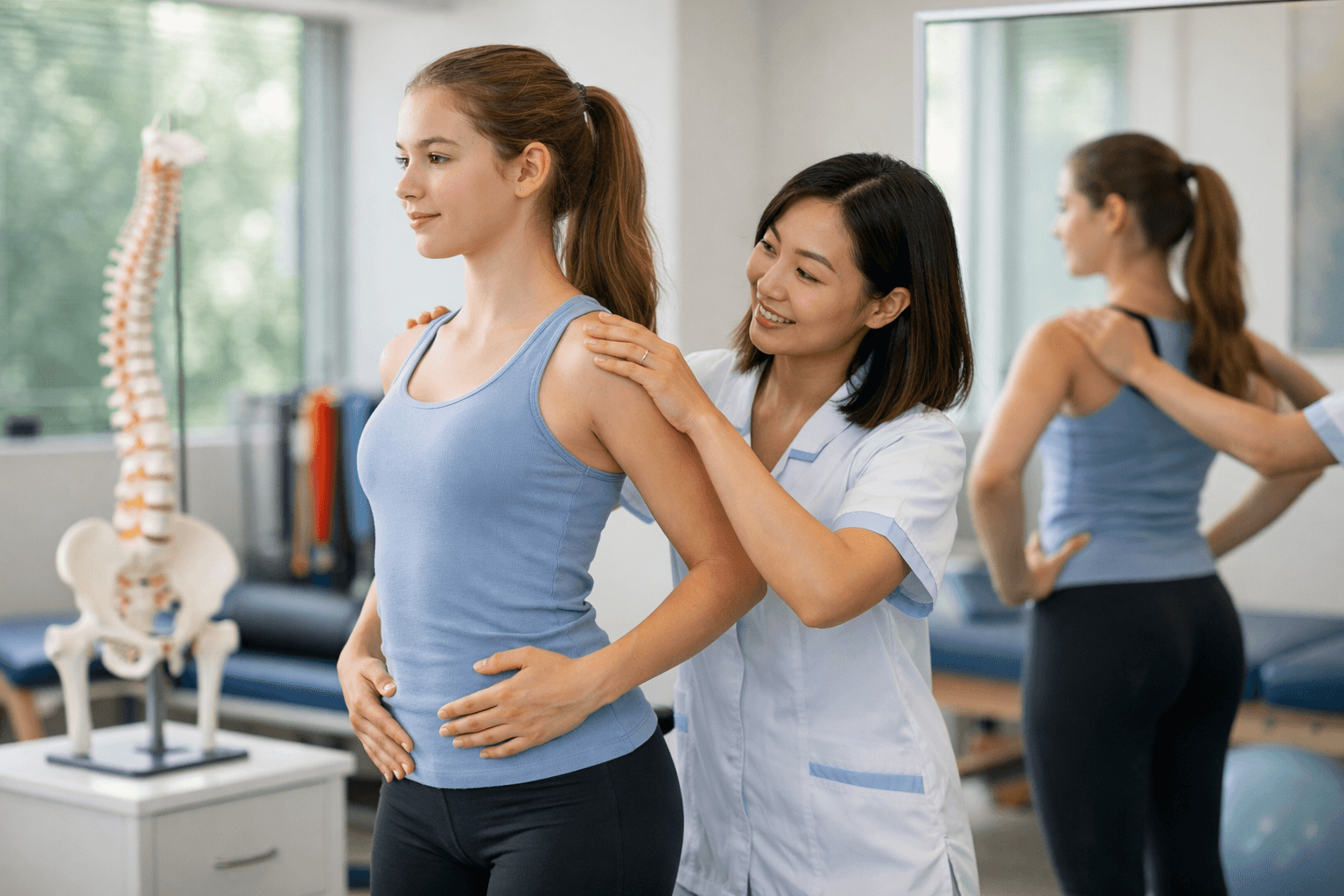
Many specialised programs use Postural Specific Scoliosis Exercises (PSSE) to retrain posture and spinal stability. These exercises help patients learn how to:
-
Shift the hips into better alignment
-
Balance shoulder position
-
Activate core muscles more effectively
-
Improve breathing and spinal support
With proper guidance, patients can build stronger postural control and continue enjoying the activities they love.
Medical Disclaimer
This article is for educational purposes only and does not constitute medical advice.
Scoliosis varies significantly between individuals. Always consult a qualified healthcare professional before starting any new sport or exercise program, especially if you have scoliosis, spinal conditions, pain, or previous injuries. Participation in sports should be guided by individual assessment and professional recommendation.
The image is shared for educational purposes with patient consent. Individual outcomes vary. Structural correction does not automatically restore full respiratory function. Clinical assessment is required.
Copyright & Content Protection Notice
© 2026 All Well Scoliosis Centre. All rights reserved.
This content is original and protected by copyright law.
No part of this article may be reproduced, distributed, copied, or reused in any form without prior written permission. Unauthorized use, duplication, or content scraping is strictly prohibited.