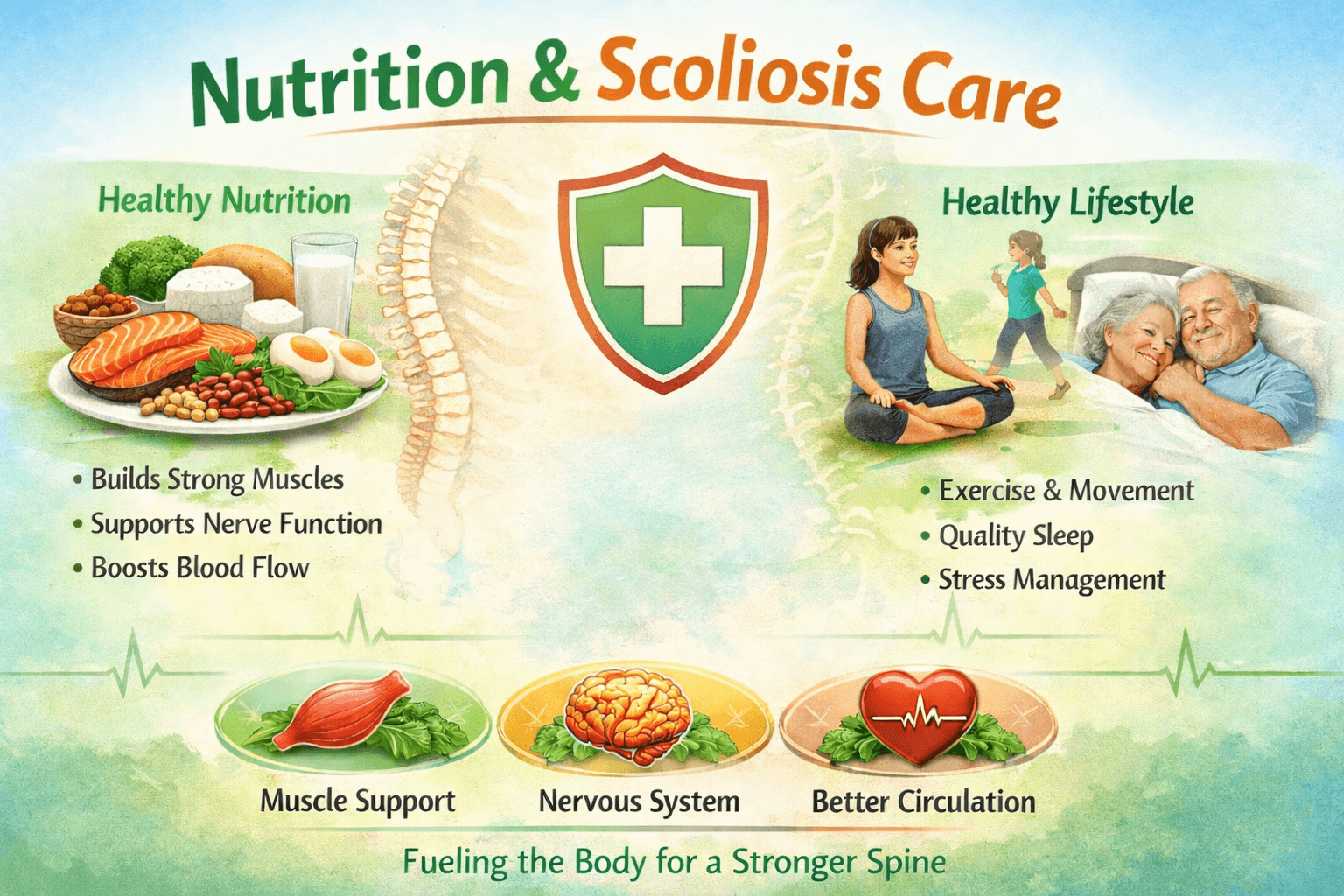
Nutrition and Scoliosis Care in Singapore: Why Protein and Lifestyle Matter at Every Age
When parents in Singapore hear the word scoliosis, the first concern is often the curve of the spine. X-rays, Cobb angles, and posture quickly become the focus. While these are important, there is a crucial factor that is often overlooked in scoliosis management—nutrition.
At All Well Scoliosis Centre (Orchard, Singapore), we see scoliosis not just as a spinal condition, but as a whole-body challenge. The spine depends on muscles, the nervous system, blood circulation, and daily lifestyle habits. What your child—or you—eat every day directly affects how well the spine can cope, adapt, and stay strong.
This applies to:
-
Children and teenagers with scoliosis
-
Adults struggling with pain, stiffness, or fatigue
-
Asian seniors who may not be accustomed to eating enough protein
Why Nutrition Is Essential for Scoliosis Management
The spine does not function alone. It is supported by muscles, regulated by the nervous system, and nourished by blood flow. Nutrition influences all of these systems.
In children with scoliosis, poor nutrition may affect:
-
Muscle development during growth years
-
Postural stability and endurance
-
Recovery from exercise or scoliosis treatment
In adults with scoliosis, inadequate nutrition can lead to:
-
Faster muscle fatigue
-
Increased stiffness and discomfort
-
Reduced spinal resilience over time
In seniors, especially within Asian households where protein intake is traditionally lower, insufficient nutrition may contribute to:
-
Muscle loss (sarcopenia)
-
Poor balance and higher fall risk
-
Reduced independence and mobility
Protein Intake: A Key Support for the Scoliotic Spine
Protein is essential for building and maintaining muscle—the spine’s natural support system.
For scoliosis patients of all ages, consuming at least the bare minimum daily protein requirement helps to:
-
Build and repair muscles that support spinal alignment
-
Support healthy nervous system function
-
Improve blood circulation and tissue healing
-
Prevent excessive strain on the nervous system
Many children, adults, and seniors in Singapore do not consume enough protein—not due to neglect, but due to habit, appetite, or cultural eating patterns. Rice, noodles, and vegetables are common staples, while protein portions may be small or inconsistent.
At All Well Scoliosis Centre, we do not promote extreme diets. Our focus is on practical, sustainable nutrition changes that work within Asian lifestyles and family routines.
The Nervous System, Blood Flow, and Spine Health
The spine houses and protects the nervous system. When nutrition is insufficient, nerve signalling becomes less efficient, muscles tire more quickly, and inflammation increases.
This may affect:
-
Posture and coordination in children
-
Endurance and recovery in adults
-
Balance, safety, and confidence in seniors
For scoliosis patients, these factors influence not only comfort, but also long-term spinal stability and quality of life.
Why Dr. Albert Emphasises Nutrition in Scoliosis Care
Dr. Albert is a Doctor of Chiropractic, trained through a four-year doctoral programme that places strong emphasis on prevention, education, and whole-body health.
Chiropractors are trained to:
-
Identify dysfunction early
-
Educate patients and families
-
Support long-term health through lifestyle changes
This is why many chiropractors and DCs focus on nutrition, movement, sleep, and daily habits, rather than only treating symptoms.
Medical doctors and general practitioners play an important role in managing acute conditions and symptoms. Chiropractic care, however, focuses on preventing problems from progressing, especially in conditions like scoliosis where early intervention matters.
What Parents and Patients Experience at All Well Scoliosis Centre
Parents often notice that consultations at All Well go beyond spinal checks.
Alongside discussing the spine, Dr. Albert regularly talks about:
-
Daily eating habits
-
Protein intake and nutrition awareness
-
Exercise and movement patterns
-
Sleep quality and recovery
This is because scoliosis progression and spinal health are influenced by how the body is fuelled and used daily.
Your Body Is a Vehicle—Fuel It for Strength and Safety
We often explain scoliosis care using a simple analogy.
Your body is like a vehicle.
What you put into it determines:
-
How efficiently it performs
-
How resilient it is under stress
-
How safely it handles impact or injury
Just as you would not neglect your car’s fuel or maintenance, your body—especially with scoliosis—requires consistent care.
A Message for Parents, Adults, and Seniors in Singapore
Nutrition is not separate from scoliosis care—it is part of it.
Whether you are:
-
A parent supporting a child with scoliosis
-
An adult managing spinal discomfort
-
A senior aiming to stay strong and independent
Proper nutrition, adequate protein intake, healthy movement, and good lifestyle habits work together to support spinal health.
At All Well Scoliosis Centre, our goal is not just to manage scoliosis—but to help you or your child build a body that is strong, resilient, and prepared for life.