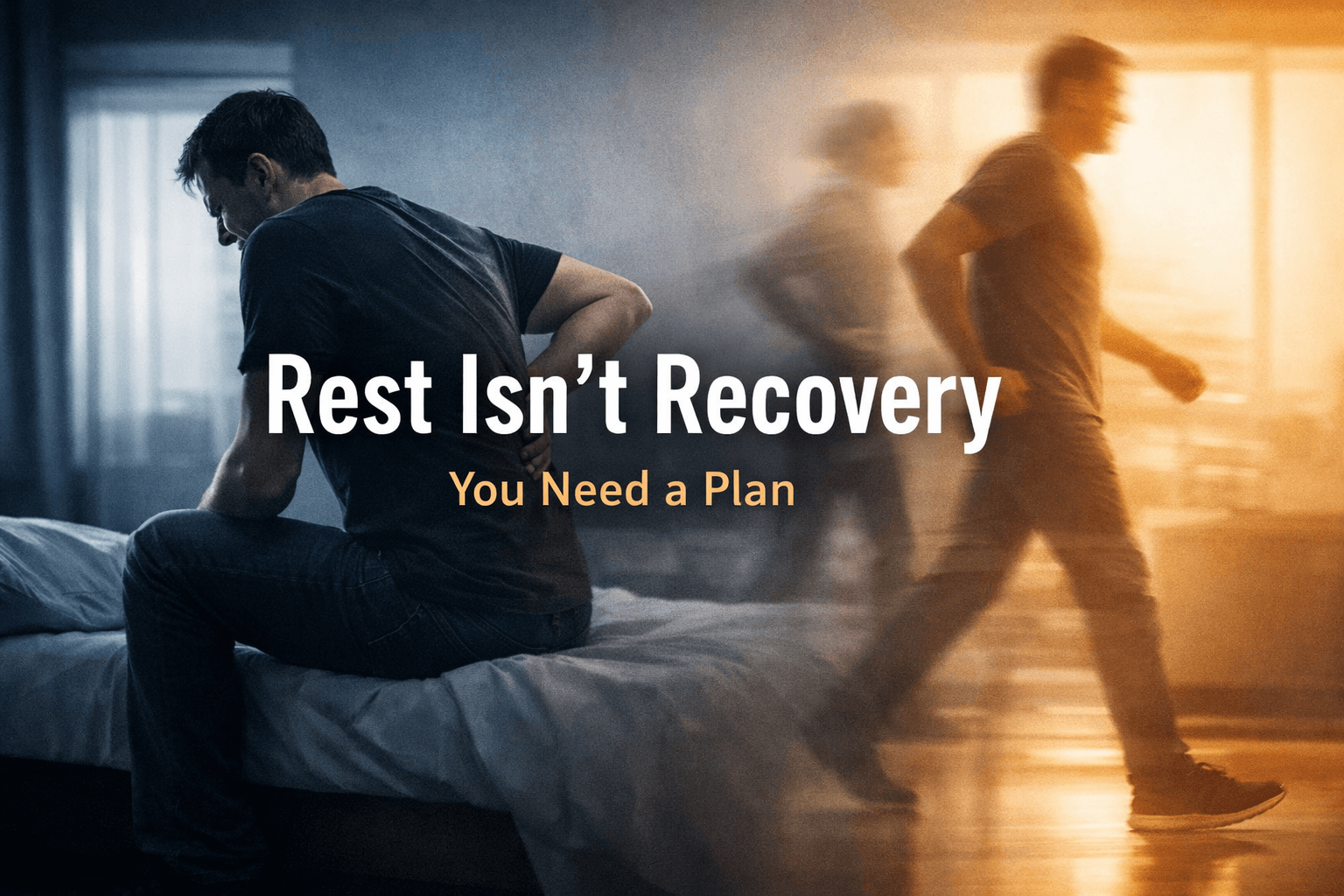
“Just Rest” After an Accident? Why That Advice Might Be Slowing Your Recovery
You Got Into an Accident… Now What?
You’re hurting. You finally see a doctor.
And you hear the words:
“Just rest. Take it easy. It’ll get better.”
Let’s be clear—this advice isn’t wrong.
In the first few days after an injury, especially when swelling and inflammation are high, rest plays a role. Many general practitioners (GPs) recommend the well-known RICE protocol (Rest, Ice, Compression, Elevation) as a form of first aid.
But here’s the truth most people are never told:
Rest is only the beginning—not the full treatment plan.
What Happens Inside Your Body After an Impact
The moment you experience trauma—whether from a fall, sports injury, or car accident—your body reacts immediately:
-
Tissues become irritated and inflamed
-
Muscles tighten and guard the injured area
-
Joint movement becomes restricted
-
Your nervous system becomes more sensitive to pain
This is a protective response. Your body is trying to keep you safe.
But if nothing changes after this initial phase…
That protection can turn into a problem.
The Hidden Danger of “Too Much Rest”
When rest continues without reassessment or direction, your body doesn’t simply “heal better.” Instead, it can begin to decline:
-
Stiffness increases
-
Muscles weaken
-
Movement patterns become dysfunctional
-
Pain becomes chronic and harder to reverse
This is where many patients get stuck.
Rest without a plan can quietly turn into delayed recovery.
Rest With Direction vs. Rest Without a Plan
Let’s simplify it:
-
Rest with direction = Recovery
-
Rest without a plan = Regression
The difference?
Guidance, assessment, and progression.
What I’ve Seen in Clinical Practice (US vs Singapore)
During my early years specializing in personal injury, work injuries, and automobile accidents in the United States, there was a very clear system:
-
GPs handled initial assessment and acute care
-
If surgery wasn’t required, patients were referred immediately for rehabilitation
-
Chiropractors played a key role in clinical evaluation, movement restoration, and recovery planning
-
Insurance providers often supported early intervention
Patients didn’t just “wait and see.”
They were given a roadmap to recovery.
In Singapore, however, I often see a different pattern:
Patients are told to rest… and then wait.
Weeks pass. Sometimes months.
By the time they seek further help, the condition is no longer acute—it has become chronic and more complex to treat.
What Patients Actually Need After an Injury
Every week, I meet patients who were told to “just rest”—but what they truly needed was:
-
A precise diagnosis (not just a general label)
-
Targeted rehabilitation exercises
-
A structured, step-by-step recovery plan
-
Ongoing reassessment to track progress
-
Additional support when necessary, such as:
-
Imaging (X-ray, MRI)
-
Medications
-
Injections
-
Regenerative therapies
-
Healing isn’t passive. It’s guided.
Introducing the MEAT Approach to Recovery
For long-term healing, we move beyond RICE into a more active strategy:
MEAT Protocol
-
Movement – Restore safe, controlled motion early
-
Exercise – Rebuild strength and stability
-
Analgesics – Manage pain appropriately when needed
-
Treatment – Hands-on care, rehab, and professional guidance
This approach supports true recovery, not just symptom suppression.
Why Movement Matters More Than You Think
The longer you stay in “rest mode,” the more your body adapts in the wrong way:
-
Muscles supporting your joints weaken
-
Compensation patterns develop
-
Pain signals become more persistent
The irritation doesn’t just go away—it becomes harder to unwind.
That’s why progressive movement—introduced at the right time—is critical.
You Deserve More Than Generic Advice
No two injuries are the same.
Your recovery should never be based on a one-size-fits-all instruction like
“just rest and see how it goes.”
You deserve:
-
A plan tailored to your injury
-
Care adapted to your body
-
A strategy aligned with your goals
When Should You Seek a Second Opinion?
If any of these sound familiar, it’s time for a more specific evaluation:
-
Pain lasting more than 1–2 weeks
-
Increasing stiffness or reduced mobility
-
Pain that comes back when you try to move
-
Feeling unsure about what to do next
Your Recovery Needs a Roadmap
If you’ve been in an accident and you’re still waiting for the pain to
“just go away”…
That waiting may be the very thing slowing you down.
Recovery isn’t about doing nothing. It’s about doing the right things, at the right time, in the right order.
Final Takeaway
-
Rest is important—but temporary
-
Healing requires movement, structure, and guidance
-
The sooner you get a clear plan, the better your outcome
If you’re recovering from an accident and unsure what your next step should be,
it may be time to move beyond rest—and start real recovery.
Get assessed. Get clarity. Get a plan.
Medical Disclaimer
This article is for educational purposes only and does not constitute medical advice.
Scoliosis varies significantly between individuals. Always consult a qualified healthcare professional before starting any new sport or exercise program, especially if you have scoliosis, spinal conditions, pain, or previous injuries. Participation in sports should be guided by individual assessment and professional recommendation.
The image is shared for educational purposes with patient consent. Individual outcomes vary. Structural correction does not automatically restore full respiratory function. Clinical assessment is required.
Copyright & Content Protection Notice
© 2026 All Well Scoliosis Centre. All rights reserved.
This content is original and protected by copyright law.
No part of this article may be reproduced, distributed, copied, or reused in any form without prior written permission. Unauthorized use, duplication, or content scraping is strictly prohibited.