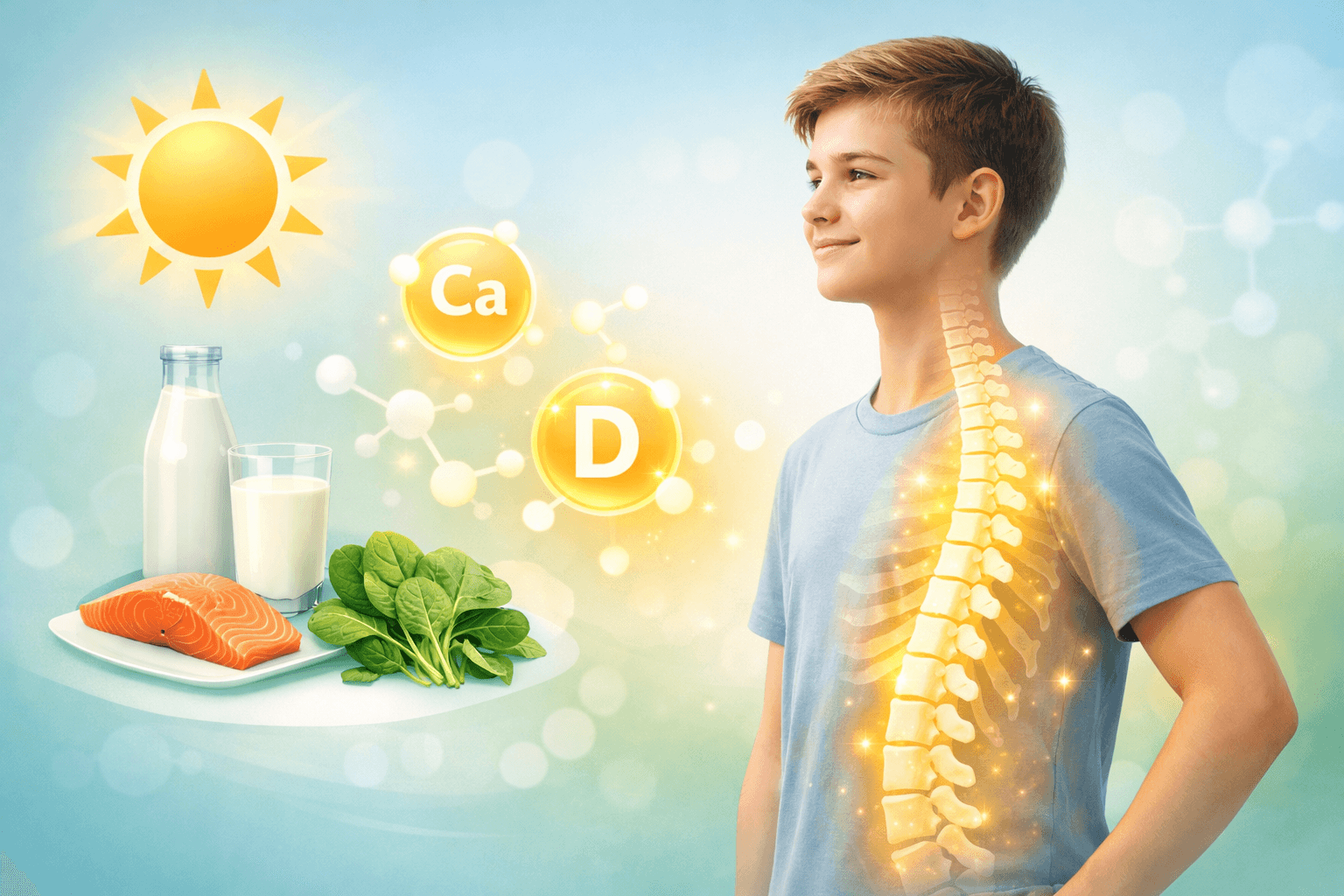
Growth Hormone, Nutrition, and Scoliosis: What to Eat and How to Prevent Progression
Managing a spinal condition like scoliosis requires more than one approach. Nutrition, hormonal health, movement, and early monitoring all play important roles—especially during growth years when the body is still developing.
When a calcium deficiency is identified—typically around 1,000 mg daily requirement—it becomes a key focus in treatment. However, it is important to understand that nutrition alone does not “straighten” the spine. Instead, the goal is to strengthen the body, support bone development, reduce progression risk, and improve overall function and comfort.
Why Growth Hormone Matters in Scoliosis
During childhood and adolescence, growth hormone plays a major role in bone development, muscle growth, and tissue repair. This is why scoliosis progression is often more active during growth spurts.
Growth hormone works closely with the skeletal system to:
-
Build bone density
-
Support spinal stability
-
Enhance muscle support around the spine
When growth hormone is active, the body responds faster to corrective strategies such as exercise, bracing, and postural training.
Children and Teenagers
-
Faster response to treatment
-
Higher adaptability in spinal correction strategies
-
Greater benefit from nutrition and exercise
Adults
-
Slower response due to reduced hormone activity
-
Focus shifts to maintenance, pain management, and preventing degeneration
-
Nutrition still plays a key role in bone preservation
The Role of Calcium in Spine Health
Calcium is essential for bone strength and structural integrity. A deficiency can weaken bones, making the spine more vulnerable to progression or discomfort.
To improve calcium levels naturally, dietary changes are the first step.
Calcium-Rich Foods to Include Daily
-
Dairy products: milk, yogurt, cheese
-
Leafy greens: spinach, kale
-
Fortified cereals and juices
-
Fish with edible bones: sardines, canned salmon
-
Almonds and nuts
-
Tofu and soy products
-
Beans and lentils
In some cases, supplementation may be required, but this should always be guided by a healthcare provider to avoid excessive intake.
Beyond Calcium: Nutrients That Support Bone and Hormone Health
Calcium does not work alone. The body needs a combination of nutrients to absorb and utilize it effectively.
Key Nutrients to Focus On
Vitamin D
-
Helps calcium absorption
-
Supports immune and bone health
-
Sources: sunlight, fatty fish, fortified foods
Magnesium
-
Aids in bone formation
-
Supports muscle relaxation
-
Sources: nuts, seeds, whole grains
Protein
-
Essential for muscle development and spinal support
-
Supports growth hormone function
-
Sources: lean meat, eggs, legumes
Zinc
-
Plays a role in growth hormone production
-
Supports tissue repair
-
Sources: meat, shellfish, seeds
Supplements are for children who need extra support. High-dose options are only given when necessary and available at the clinic.
Growth Hormone Optimization Through Lifestyle
Optimizing growth hormone is not just about diet—it also depends on daily habits.
Key Preventive Strategies
1. Quality Sleep
Growth hormone is mainly released during deep sleep. Poor sleep can reduce its effectiveness.
-
Aim for 8–10 hours (children/teens)
-
Maintain consistent sleep timing
2. Regular Movement and Exercise
Spine-specific exercises improve muscle activation and postural control.
-
Postural Specific Scoliosis Exercises (PSSE)
-
Core strengthening routines
-
Low-impact activities like swimming or Pilates
3. Avoid Sedentary Lifestyle
Long sitting hours, especially with poor posture, can worsen spinal stress.
4. Balanced Physical Activities
Avoid excessive:
-
Repetitive extreme back bending (e.g., gymnastics, ballet)
-
Unilateral high-impact sports without conditioning (e.g., tennis, badminton)
Instead, focus on balanced training that promotes symmetry and control.
Hormonal and Medical Considerations
In some cases, scoliosis management may involve evaluating hormonal systems such as the thyroid, as it influences metabolism and bone health.
Regular monitoring may include:
-
Blood calcium levels
-
Vitamin D levels
-
Hormonal assessments when needed
This ensures a comprehensive and safe treatment plan.
The Importance of Early Detection and Monitoring
Early intervention provides the best opportunity to manage scoliosis effectively.
Signs to watch for:
-
Uneven shoulders or hips
-
Visible spinal curve
-
Back discomfort or fatigue
Routine screening and professional assessment allow for a personalized care plan that includes:
-
Nutrition optimization
-
Exercise therapy
-
Bracing (if required)
-
Ongoing monitoring
A Holistic Approach to Scoliosis Care
Nutrition is not a standalone solution—but it is a powerful support system.
A well-balanced diet combined with:
-
Proper movement strategies
-
Hormonal optimization
-
Clinical guidance
can significantly improve outcomes.
For children and adolescents, this approach enhances growth potential and reduces progression risk. For adults, it helps maintain bone health, reduce pain, and improve quality of life.
Final Thoughts
Scoliosis management is not about quick fixes—it is about building a strong foundation for the body.
By focusing on calcium intake, supporting nutrients, and optimizing growth hormone through proper lifestyle habits, you create an environment where the spine is better supported.
With early action and a structured, personalized plan, individuals with scoliosis can continue to grow, move, and live confidently without limitations.
Medical Disclaimer
This article is for educational purposes only and does not constitute medical advice.
Scoliosis varies significantly between individuals. Always consult a qualified healthcare professional before starting any new sport or exercise program, especially if you have scoliosis, spinal conditions, pain, or previous injuries. Participation in sports should be guided by individual assessment and professional recommendation.
The image is shared for educational purposes with patient consent. Individual outcomes vary. Structural correction does not automatically restore full respiratory function. Clinical assessment is required.
Copyright & Content Protection Notice
© 2026 All Well Scoliosis Centre. All rights reserved.
This content is original and protected by copyright law.
No part of this article may be reproduced, distributed, copied, or reused in any form without prior written permission. Unauthorized use, duplication, or content scraping is strictly prohibited.