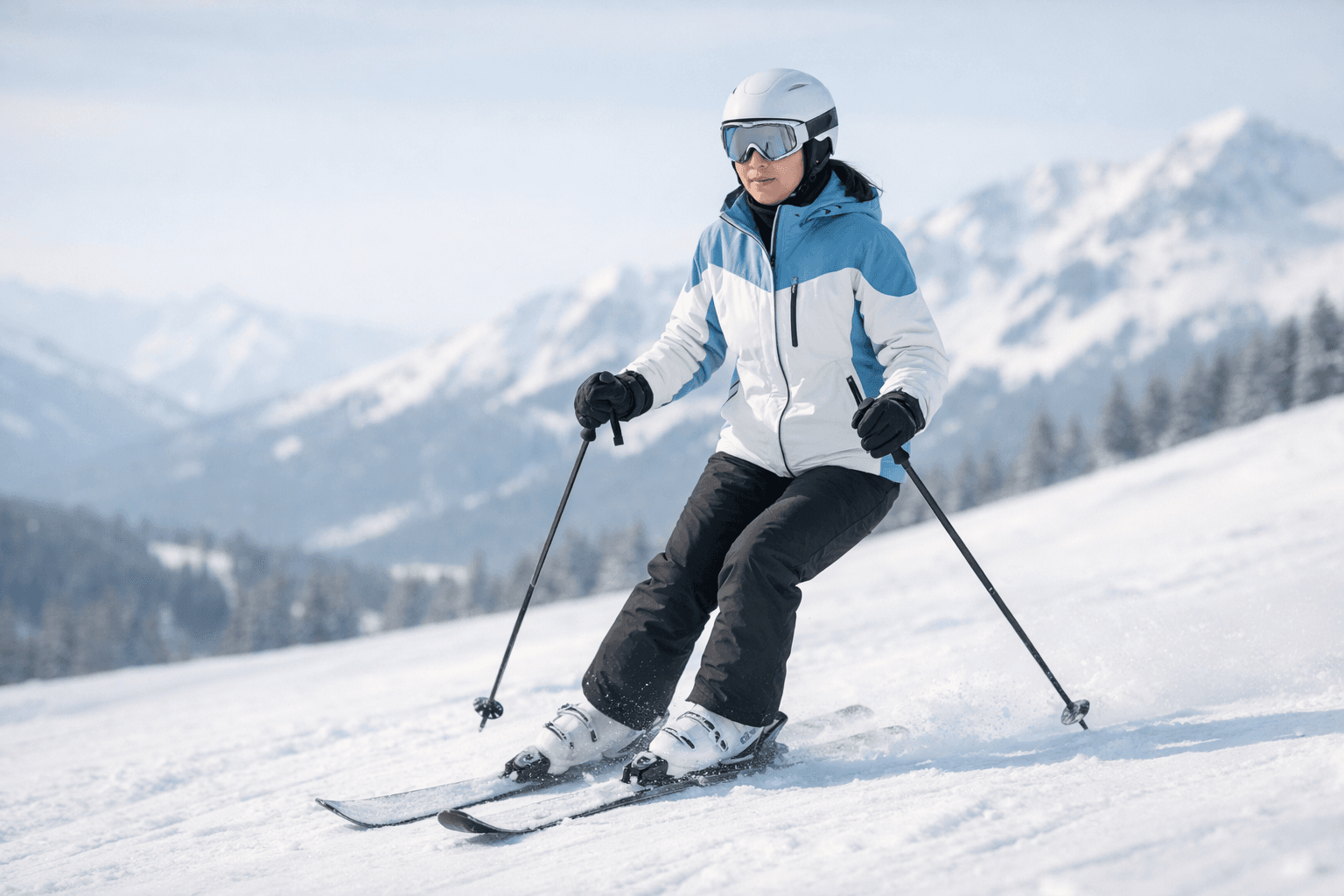
Winter Olympic Sports & Scoliosis: Why Skiing and Ice Skating Deserve Attention
Can People With Scoliosis Participate in Winter Sports?
Every four years, the Winter Olympics remind us of something powerful:
the human body is not built for comfort — it is built for adaptation, coordination, and movement.
For individuals living with scoliosis, this raises an important question:
Can people with scoliosis safely participate in winter sports like skiing or ice skating?
And more importantly — why are these sports often beneficial when approached correctly?
This article explores the relationship between winter Olympic sports, scoliosis, spinal health, and movement-based resilience, with a special focus on skiing and ice skating.
Understanding Scoliosis and Movement
Scoliosis is a three-dimensional spinal condition, involving:
-
Sideways curvature
-
Spinal rotation
-
Changes in muscle balance and load distribution
Contrary to outdated beliefs, people with scoliosis are not meant to avoid movement. In fact, appropriate, well-guided movement is often essential for:
-
Neuromuscular control
-
Balance and coordination
-
Strength symmetry
-
Long-term spinal resilience
Modern scoliosis care emphasizes function, adaptability, and confidence, not fear or restriction.
Are There Scoliosis Cases in Winter Olympic Sports?
Yes — while not always publicly highlighted, many elite athletes compete with spinal asymmetries, mild scoliosis, or functional curves.
At the elite level:
-
Perfect spinal symmetry is rare
-
Performance relies on coordination, proprioception, and strength adaptation
-
Athletes are trained to manage asymmetry efficiently
What matters most is how the body loads, controls, and recovers, not whether a spine is perfectly straight.
This is a valuable lesson for everyday individuals with scoliosis.
Why Skiing Is Often Scoliosis-Friendly (When Properly Guided)
1. Dynamic Balance & Core Engagement
Skiing is a constantly adaptive sport:
-
Terrain changes
-
Speed variations
-
Directional control
This naturally trains:
-
Deep core stabilizers
-
Hip-spine coordination
-
Reflexive balance systems
Rather than locking the spine, skiing encourages controlled mobility with stability — a key principle in scoliosis management.
2. Bilateral Strength & Load Awareness
Although skiing appears symmetrical, it subtly challenges:
-
Weight transfer
-
Left-right coordination
-
Lower limb dominance
For scoliosis patients, this improves:
-
Awareness of asymmetrical loading
-
Controlled force distribution
-
Reduced fear of uneven movement
3. Endurance Without High Impact
Unlike running on hard ground, skiing:
-
Is relatively low-impact
-
Allows longer movement duration
-
Reduces repetitive spinal compression
This makes it suitable for adolescents and adults with scoliosis, when introduced progressively.
Why Ice Skating Is a Powerful Movement Tool for Scoliosis
1. Rotational Control (Not Avoidance)
Scoliosis is rotational by nature — avoiding rotation entirely is neither realistic nor healthy.
Ice skating trains:
-
Controlled spinal rotation
-
Counter-rotation between upper and lower body
-
Smooth, coordinated transitions
This teaches the body how to rotate safely, rather than fear rotation.
2. Postural Awareness Without Rigidity
Ice skating demands:
-
Upright alignment
-
Head, ribcage, and pelvis coordination
-
Dynamic posture under movement
Importantly, posture is not static — it constantly adapts, which aligns with modern spinal health principles.
3. Neuromuscular Precision & Confidence
The slippery surface forces:
-
Precise muscle timing
-
Calm nervous system regulation
-
Confidence in controlled instability
This is particularly beneficial for scoliosis patients who:
-
Feel “off balance”
-
Fear asymmetrical movement
-
Have reduced body awareness
Is Skiing or Ice Skating Safe for All Scoliosis Cases?
Not all scoliosis cases are the same.
Participation depends on:
-
Curve type and severity
-
Age and skeletal maturity
-
Pain history
-
Previous injuries
-
Current strength and movement control
Professional assessment is essential before starting or returning to winter sports.
That said, many individuals with mild to moderate scoliosis — including adults — can ski or skate safely with proper guidance.
Key Guidelines for Scoliosis & Winter Sports
If you have scoliosis and are considering skiing or ice skating:
-
✅ Prioritize technique over intensity
-
✅ Build core and hip strength beforehand
-
✅ Progress gradually
-
✅ Avoid fatigue-driven poor control
-
✅ Listen to pain signals — pain is information, not weakness
Winter sports should build confidence, not fear.
The Bigger Lesson from the Winter Olympics
The Winter Olympics remind us that:
-
Bodies are adaptable
-
Strength comes from coordination, not perfection
-
Movement is medicine when applied intelligently
For individuals with scoliosis, skiing and ice skating represent something deeper than sport:
They represent trust in the body’s ability to adapt.
Medical Disclaimer
This article is for educational purposes only and does not constitute medical advice.
Scoliosis varies significantly between individuals. Always consult a qualified healthcare professional before starting any new sport or exercise program, especially if you have scoliosis, spinal conditions, pain, or previous injuries. Participation in sports should be guided by individual assessment and professional recommendation.
Copyright & Content Protection Notice
This content is original and protected by copyright law.
No part of this article may be reproduced, distributed, copied, or reused in any form without prior written permission. Unauthorized use, duplication, or content scraping is strictly prohibited.
© 2026 All Well Scoliosis Centre. All rights reserved.