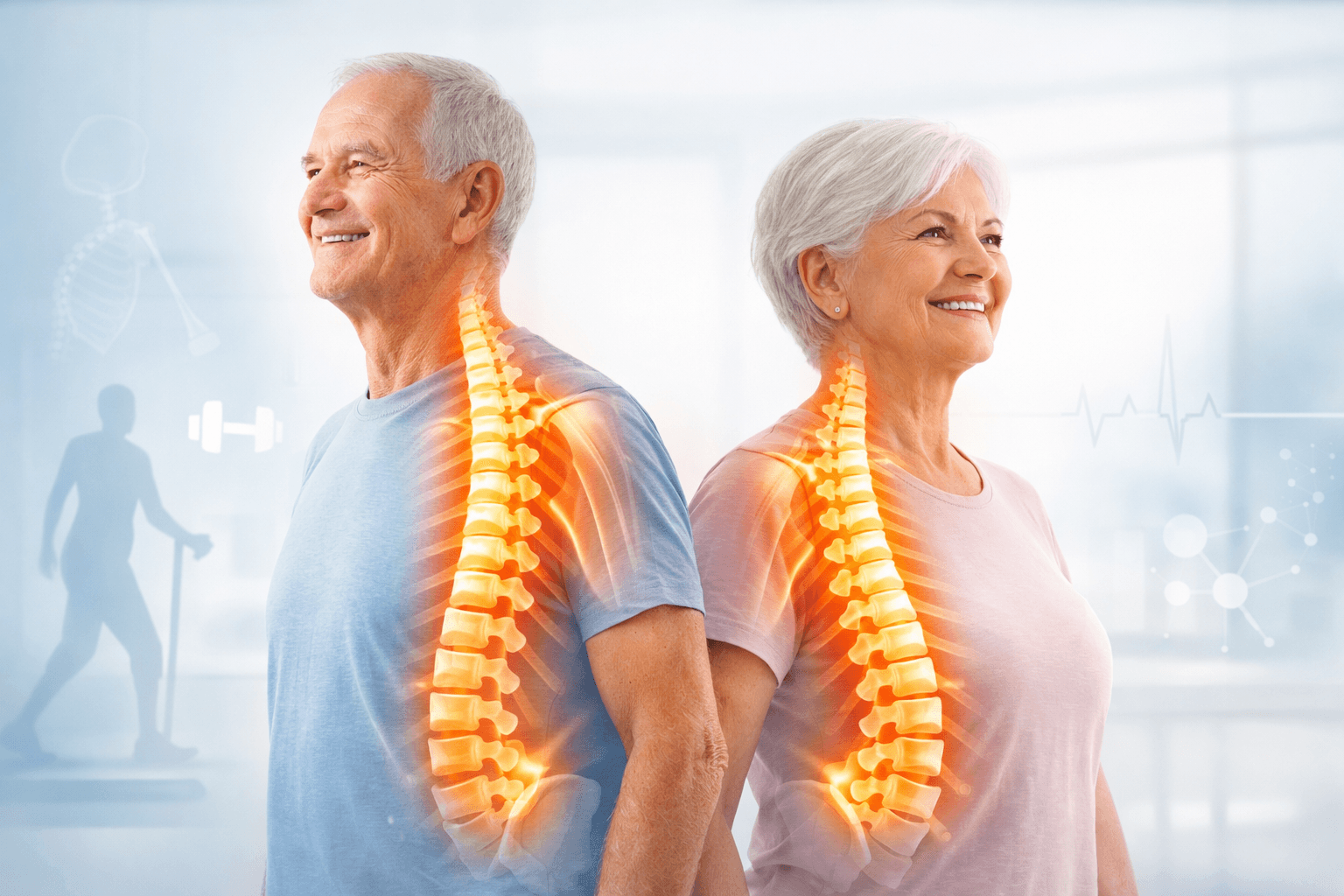
Bone Density Loss in the Elderly: Why Nutrition and Muscle Strength Matter More Than Ever
As people age, one of the most serious but often overlooked health challenges is bone density loss. Weak bones can lead to spinal collapse, chronic back pain, fractures, and loss of independence. Many elderly individuals only start thinking about their bone health when symptoms appear—but by then, the process has already been developing for decades.
Bone health is not built overnight. It is the result of years of nutrition, muscle development, physical activity, and lifestyle habits. Without these foundations, even the best treatments cannot restore the structural strength of the spine.
At All Well Scoliosis Centre, we often remind patients that spinal care is not just about treatment—it is about building a body that can support itself for life.
Understanding Bone Density Loss in Aging
Bone is living tissue that constantly renews itself. Throughout life, the body breaks down old bone and replaces it with new bone in a process called bone remodeling.
However, as we age, this balance begins to shift.
Bone breakdown starts to occur faster than bone formation. This leads to a gradual decline in bone mineral density and can eventually develop into Osteoporosis, a condition where bones become fragile and prone to fractures.
Research shows that bone density can begin to decline as early as the late 30s and accelerates significantly after hormonal changes later in life, particularly in post-menopausal women.
When bone density decreases in the spine, the vertebrae become weaker and more vulnerable to compression. Over time, this can result in spinal collapse and the characteristic forward-bent posture seen in many elderly individuals.
Research shows that bone density steadily declines during adulthood and can accelerate significantly after hormonal changes, especially in postmenopausal women. Studies indicate that bone mineral density decreases progressively between ages 39 and 80, with women losing density faster due to hormonal shifts such as declining estrogen levels.
By age 60 or 70, bones may already have lost a significant portion of their strength. This is why fractures, vertebral compression, and spinal collapse become more common in the elderly.
But bone strength does not depend on bone tissue alone.
Why Chiropractic Adjustment Alone Is Not a Miracle Solution
Many people believe that spinal adjustments alone can fix structural spinal problems. Chiropractic care plays an important role in improving spinal mobility and nervous system function, but it cannot rebuild bone density or reverse severe structural collapse by itself.
The spine is supported by three key systems:
-
Bone structure
-
Muscle support
-
Nervous system coordination
If the bones are weak and the muscles are not strong enough to support posture, the spine will continue to collapse under gravity.
That is why true spinal health requires a comprehensive lifestyle approach.
The Most Important “Growth Hormone” You Can Invest In: Muscle
People often look for anti-aging injections or supplements to maintain strength as they grow older. But the most powerful investment for your skeletal health is muscle development.
Muscles play a direct role in bone health through mechanical stimulation. When muscles contract during resistance or weight-bearing exercise, they place healthy stress on bones. This stress signals the body to strengthen bone tissue.
Scientific studies show that resistance training and weight-bearing exercises help maintain or even improve bone mineral density in older adults.
Stronger muscles also help:
-
support spinal alignment
-
reduce pressure on vertebrae
-
improve balance and stability
-
prevent falls and fractures
In simple terms:
Strong muscles help your body stand tall without placing excessive burden on your spine.
Calcium Alone Is Not Enough for Strong Bones
Many elderly individuals take calcium supplements hoping to protect their bones. Calcium is essential, but research shows that calcium supplementation alone does not significantly improve bone density without physical activity.
Bones respond to movement and load, not just nutrients.
Without muscle engagement and weight-bearing exercise, calcium intake alone may not effectively strengthen skeletal structure.
Bone health depends on three main nutritional pillars:
-
Calcium for bone mineralization
-
Vitamin D for calcium absorption
-
Protein to build and maintain muscle mass
When these nutrients are combined with regular exercise, the body can maintain stronger bones even in older age.
Another clinical trial examining specifically Chinese elderly individuals demonstrated that load-bearing exercise combined with calcium intake was significantly more effective than calcium supplementation alone in maintaining bone density.
This is because bone adapts to mechanical stress, not just nutrient intake.
Without exercise, calcium may circulate in the bloodstream but will not necessarily strengthen skeletal structure.
Think of calcium as the building material, while exercise is the architect that tells the body where to build.
Why Muscle Loss Leads to Spinal Collapse
Aging is often accompanied by a condition called Sarcopenia, which refers to the progressive loss of muscle mass and strength.
When muscles weaken, the spine loses its natural support system. This places greater pressure directly on the vertebrae.
Over time, this imbalance can lead to:
-
vertebral compression fractures
-
worsening spinal curvature
-
chronic back pain
-
reduced mobility
Muscle is not just about strength—it is about structural protection for the spine.
Your Organs and Nervous System Need Space
The spine is more than a stack of bones. It is the central support structure for the entire body.
When posture collapses, several important systems become compressed:
1. Internal Organs
Your organs need space within the rib cage and abdomen to function properly. Poor posture can compress the lungs and digestive organs.
2. Nervous System
The spinal cord carries signals from the brain to the entire body. When the spine collapses, nerve pathways can become irritated or restricted.
3. Circulation
Blood vessels travel through the spine and surrounding tissues. Good posture helps ensure efficient circulation from head to toe.
Maintaining spinal space and alignment is essential for the entire body's function.
The Hidden Danger of Modern Lifestyle
Today’s sedentary lifestyle is accelerating spinal degeneration earlier than ever before.
Prolonged hours sitting at computers or looking down at phones cause the body to gradually collapse forward.
This posture places continuous stress on the cervical and thoracic spine, weakening the postural muscles that support healthy alignment.
Over time, poor posture combined with inactivity can contribute to:
-
chronic back pain
-
spinal degeneration
-
muscle weakness
-
worsening spinal curvature
The Lifestyle Strategy for Strong Bones and a Healthy Spine
Preventing bone density loss requires consistent lifestyle habits that support both bone and muscle health.
1. Weight-Bearing Exercise
Activities such as walking, climbing stairs, resistance training, and strength exercises stimulate bone remodeling and strengthen supporting muscles.
2. Adequate Protein Intake
Protein is essential for maintaining muscle mass, especially in older adults.
3. Balanced Nutrition
A diet rich in calcium, vitamin D, magnesium, and essential nutrients supports skeletal health.
4. Good Posture
Maintaining proper posture during work, phone use, and daily activities reduces unnecessary strain on the spine.
5. Proper Rest and Recovery
Sleep allows the body to repair tissues and maintain hormonal balance.
6. Avoid Overcompensation
Excessive strain or poor movement patterns can accelerate spinal degeneration.
Start Early Before Hormonal Changes Take Over
Hormonal shifts later in life significantly affect bone metabolism. For women especially, declining estrogen levels after menopause accelerate bone loss.
By the time this process begins, rebuilding bone density becomes much more difficult.
That is why prevention must start early.
Building muscle, maintaining good nutrition, and staying physically active create a protective reserve that helps preserve spinal health later in life.
The Truth About Spine Health
There is no miracle injection that can completely rebuild a collapsing spine.
Chiropractic care, rehabilitation therapy, and medical treatments can support spinal function and relieve pain. However, the long-term strength of your spine depends on the lifestyle choices you make every day.
Healthy bones require:
-
strong muscles
-
balanced nutrition
-
regular movement
-
mindful posture
When these elements work together, the spine can remain strong and stable for many years.
Invest in the Right Growth Factor
If you want to stand tall in old age, start building the right foundation today.
The real question is:
Which growth hormone will you invest your time in?
Muscle.
Because strong muscles protect your bones, support your posture, and help your body stay upright without overloading your spine.
Medical Disclaimer
This article is for educational purposes only and does not constitute medical advice.
Scoliosis varies significantly between individuals. Always consult a qualified healthcare professional before starting any new sport or exercise program, especially if you have scoliosis, spinal conditions, pain, or previous injuries. Participation in sports should be guided by individual assessment and professional recommendation.
The image is shared for educational purposes with patient consent. Individual outcomes vary. Structural correction does not automatically restore full respiratory function. Clinical assessment is required.
Copyright & Content Protection Notice
© 2026 All Well Scoliosis Centre. All rights reserved.
This content is original and protected by copyright law.
No part of this article may be reproduced, distributed, copied, or reused in any form without prior written permission. Unauthorized use, duplication, or content scraping is strictly prohibited.