Bone Spurs (Osteophytes): Why Does the Body Grow Extra Bone?
Hearing that you have a bone spur on an X-ray can sound alarming. Many people immediately assume they need surgery or that the extra bone will continue growing uncontrollably.
The reality is often less dramatic.
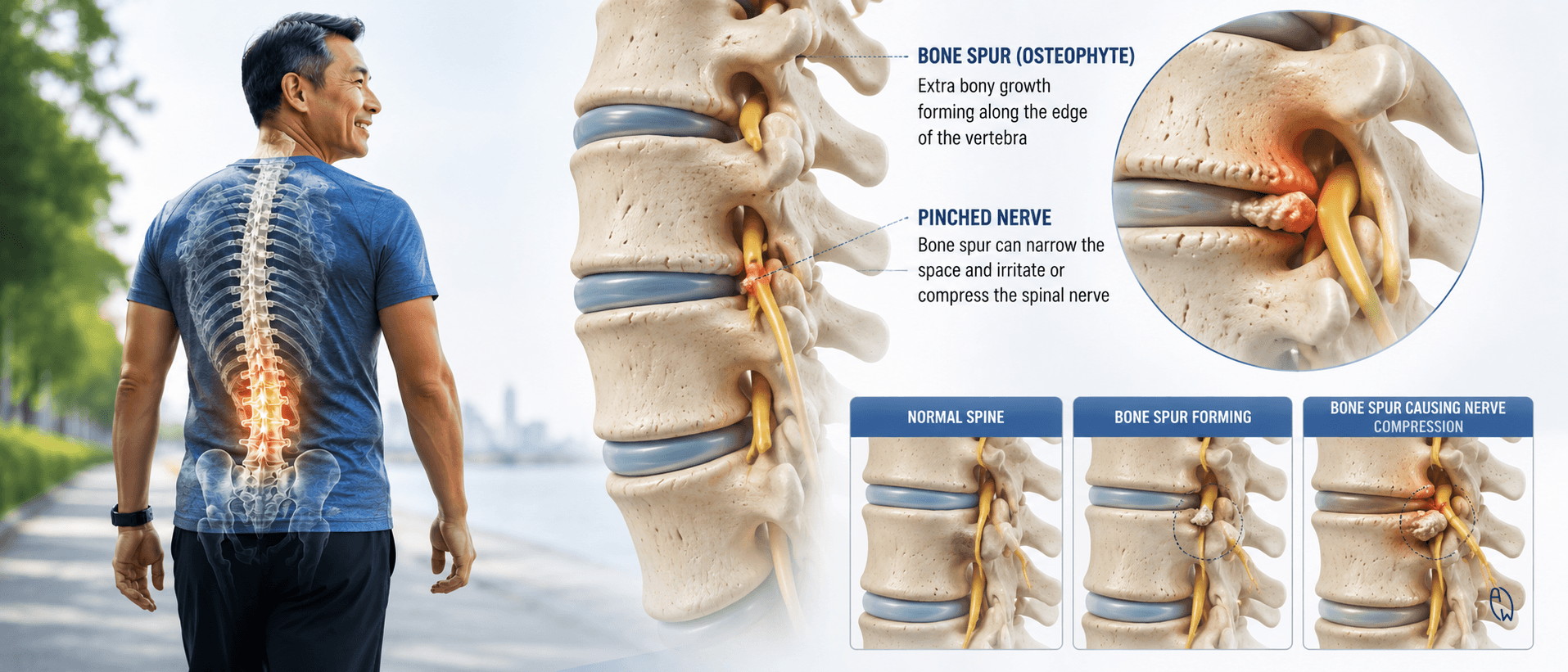
Bone spurs, medically known as osteophytes, are smooth bony projections that develop along the edges of joints or where ligaments and tendons attach to bone. They are usually the body's attempt to stabilize an area experiencing long-term stress, degeneration, or abnormal movement.
In many cases, bone spurs cause no symptoms at all and are discovered incidentally during an X-ray. However, when they begin pressing on nearby nerves, tendons, or soft tissues, they can become painful and interfere with everyday activities.
Understanding why bone spurs form—and what can be done about them—can help you make informed decisions about your spinal and joint health.
What Are Bone Spurs?
Bone spurs are not actually "spikes" or sharp protrusions.
They are typically smooth, rounded deposits of extra bone that develop gradually over time.
Think of them as the body's natural reinforcement system. When a joint becomes unstable or experiences excessive wear and tear, the body may respond by laying down additional bone in an attempt to strengthen the area.
Unfortunately, this repair mechanism is not always helpful. The extra bone can reduce joint mobility or compress surrounding structures, leading to pain and dysfunction.
Why Do Bone Spurs Develop?
Bone spurs rarely appear overnight.
They usually develop over years as the body responds to ongoing mechanical stress.
1. Osteoarthritis
The most common cause of bone spurs is osteoarthritis.
As cartilage wears away, bones begin rubbing against each other. To compensate, the body produces extra bone around the joint margins in an attempt to increase stability.
This is why bone spurs are frequently seen in older adults and individuals with degenerative joint disease.
2. Aging and Wear-and-Tear
As we age, joints experience cumulative stress from decades of movement.
Discs in the spine may lose height, cartilage becomes thinner, and ligaments become less flexible. These changes can trigger the formation of osteophytes.
3. Repetitive Stress
Certain activities repeatedly load the same joints.
Examples include:
-
Running
-
Dancing
-
Golf
-
Tennis
-
Construction work
-
Manual labor
-
Occupations involving prolonged standing
Over time, repetitive stress can contribute to joint degeneration and spur formation.
4. Obesity and Foot Mechanics
Excess body weight increases the load on weight-bearing joints such as:
-
Knees
-
Hips
-
Ankles
-
Feet
Poor footwear can also alter biomechanics and increase stress on the plantar fascia and heel, contributing to heel spur development.
5. Previous Injuries
Past trauma can change how a joint functions.
Old fractures, ligament injuries, or spinal injuries may lead to abnormal movement patterns that encourage osteophyte formation years later.
6. Genetics
Some individuals appear more predisposed to developing osteoarthritis and bone spurs due to inherited factors affecting joint structure and cartilage health.
Common Symptoms of Bone Spurs
Interestingly, bone spurs themselves are not usually painful.
Pain typically occurs when the spur irritates nearby tissues or compresses nerves.
Symptoms vary depending on the location.
Bone Spurs in the Spine
Spinal bone spurs commonly occur in the neck (cervical spine) and lower back (lumbar spine).
As discs degenerate, the body often forms osteophytes around the vertebrae.
Possible Symptoms
-
Neck stiffness
-
Back pain
-
Reduced mobility
-
Numbness
-
Tingling
-
Weakness
-
Shooting pain down the arms
-
Sciatica-like pain down the legs
These symptoms often occur because the bone spur narrows the space available for spinal nerves, a condition known as foraminal stenosis.
Heel Spurs
Heel spurs are among the most recognized forms of osteophytes.
They often develop where the plantar fascia attaches to the heel bone.
Common Symptoms
-
Sharp pain when first standing in the morning
-
Pain after prolonged sitting
-
Tenderness under the heel
-
Dull ache throughout the day
Interestingly, many people have heel spurs visible on X-rays without experiencing pain.
The discomfort often comes from irritation of the surrounding soft tissues rather than the spur itself.
Shoulder Bone Spurs
Shoulder spurs may develop beneath the acromion, where they can interfere with the rotator cuff tendons.
Symptoms
-
Pain when lifting the arm
-
Weakness
-
Clicking sensations
-
Difficulty reaching overhead
-
Night pain
Over time, this can contribute to shoulder impingement syndrome.
Knee Bone Spurs
Bone spurs commonly accompany knee osteoarthritis.
Symptoms
-
Stiffness
-
Swelling
-
Reduced range of motion
-
Pain when bending
-
Grinding or grating sensations
-
Difficulty climbing stairs
The Link Between Bone Spurs and Posture
One often-overlooked factor is posture.
Poor posture does not directly create bone spurs overnight, but it can contribute to uneven loading of joints over many years.
Examples include:
-
Forward head posture
-
Text neck
-
Rounded shoulders
-
Degenerative scoliosis
-
Chronic spinal misalignment
These mechanical stresses may accelerate degeneration and encourage the body to create additional bone for stabilization.
This is particularly common in the cervical and lumbar spine.
How Are Bone Spurs Diagnosed?
A comprehensive assessment usually includes:
Physical Examination
Your healthcare provider will assess:
-
Joint movement
-
Strength
-
Reflexes
-
Nerve function
-
Posture
X-Rays
X-rays are often the most effective way to visualize bone spurs.
They can reveal:
-
Joint degeneration
-
Disc height loss
-
Arthritis
-
Osteophyte formation
-
Alignment changes
Advanced Imaging
In cases involving nerve compression, additional imaging may be recommended:
-
MRI
-
CT scan
These studies help evaluate soft tissues, discs, and nerve involvement.
Can Bone Spurs Be Removed Naturally?
This is one of the most common questions patients ask.
Unfortunately, once a bone spur forms, it generally does not disappear naturally.
However, many people experience significant symptom relief without removing the spur.
Treatment typically focuses on:
-
Reducing inflammation
-
Improving joint mobility
-
Decreasing nerve irritation
-
Enhancing biomechanics
-
Preserving long-term function
How Chiropractic Care May Help Bone Spur Symptoms
Although chiropractic care does not "shave off" or eliminate a bone spur, it may help address the underlying mechanical issues contributing to pain and dysfunction.
1. Spinal Decompression
Spinal decompression therapy gently stretches the spine.
This can help:
-
Reduce pressure on spinal joints
-
Create more space around compressed nerves
-
Improve circulation to spinal tissues
-
Decrease radiating arm or leg symptoms
Patients with spinal bone spurs and nerve irritation often report improvements in pain, numbness, and mobility.
2. Chiropractic Adjustments
Restricted joints frequently develop abnormal movement patterns.
Targeted spinal adjustments may help:
-
Restore joint mobility
-
Improve posture
-
Reduce compensatory stress
-
Promote more balanced movement
Better biomechanics may reduce ongoing wear and tear that contributes to degeneration.
3. Soft Tissue Therapy
Muscles surrounding painful joints often become tight and protective.
Soft tissue techniques may help:
-
Reduce muscle tension
-
Improve flexibility
-
Enhance circulation
-
Decrease stress on affected joints
4. Corrective Exercises and Rehabilitation
Long-term success often depends on improving the body's support system.
Exercise programs may focus on:
-
Core strengthening
-
Postural retraining
-
Balance improvement
-
Flexibility
-
Functional movement
For spinal bone spurs, strengthening the muscles that support the spine may help reduce mechanical stress over time.
What to Expect During Chiropractic Treatment
Initial Evaluation
Your chiropractor will typically perform:
-
Health history review
-
Physical examination
-
Postural assessment
-
Neurological testing
-
X-ray evaluation if indicated
The goal is not simply to identify the spur but to understand why symptoms are occurring.
Many people have bone spurs without pain, so the underlying cause of symptoms must be carefully evaluated.
Personalized Treatment Plan
Treatment usually focuses on:
-
Symptom relief
-
Improving movement
-
Enhancing function
-
Preventing further degeneration
Most care plans span several weeks to months depending on severity and goals.
Combined Approach
The most successful outcomes often involve multiple strategies, including:
-
Chiropractic care
-
Exercise rehabilitation
-
Weight management
-
Postural correction
-
Ergonomic improvements
-
Activity modification
When Should You Seek Professional Help?
You should seek evaluation if you experience:
-
Persistent pain
-
Numbness or tingling
-
Arm or leg weakness
-
Difficulty walking
-
Loss of mobility
-
Pain that interferes with daily activities
Early intervention may help prevent symptoms from worsening and preserve long-term joint health.
Final Thoughts
Bone spurs are often misunderstood. While they may appear alarming on an X-ray, they are typically a sign that the body has been attempting to stabilize an area under stress.
The good news is that many people with osteophytes can successfully manage their symptoms without surgery.
Through a combination of proper diagnosis, spinal decompression, chiropractic care, exercise rehabilitation, and lifestyle modifications, it is often possible to reduce pain, improve mobility, and maintain an active lifestyle.
Remember: the goal is not always to remove the bone spur—it is to improve how the joint functions around it.
Frequently Asked Questions
Can bone spurs disappear on their own?
No. Bone spurs typically do not disappear naturally, but symptoms can often be managed effectively.
Are bone spurs always painful?
No. Many people have bone spurs and never experience symptoms.
Can bone spurs cause nerve pain?
Yes. If a spur compresses a nearby nerve, it can cause numbness, tingling, weakness, or radiating pain.
Do all bone spurs require surgery?
No. Most bone spurs can be managed conservatively. Surgery is usually considered only when significant nerve compression or severe functional limitations occur.
Can posture affect bone spur development?
Poor posture and abnormal joint mechanics may contribute to uneven wear and degeneration over time, potentially increasing the likelihood of osteophyte formation.
Experiencing symptoms from a bone spur?
Tell us:
-
Where is the bone spur located? (Neck, lower back, shoulder, knee, heel, etc.)
-
What symptoms are you experiencing? (Pain, numbness, tingling, stiffness, weakness, etc.)
A proper assessment can help determine whether the bone spur itself is causing your symptoms or whether other factors are contributing to your discomfort.