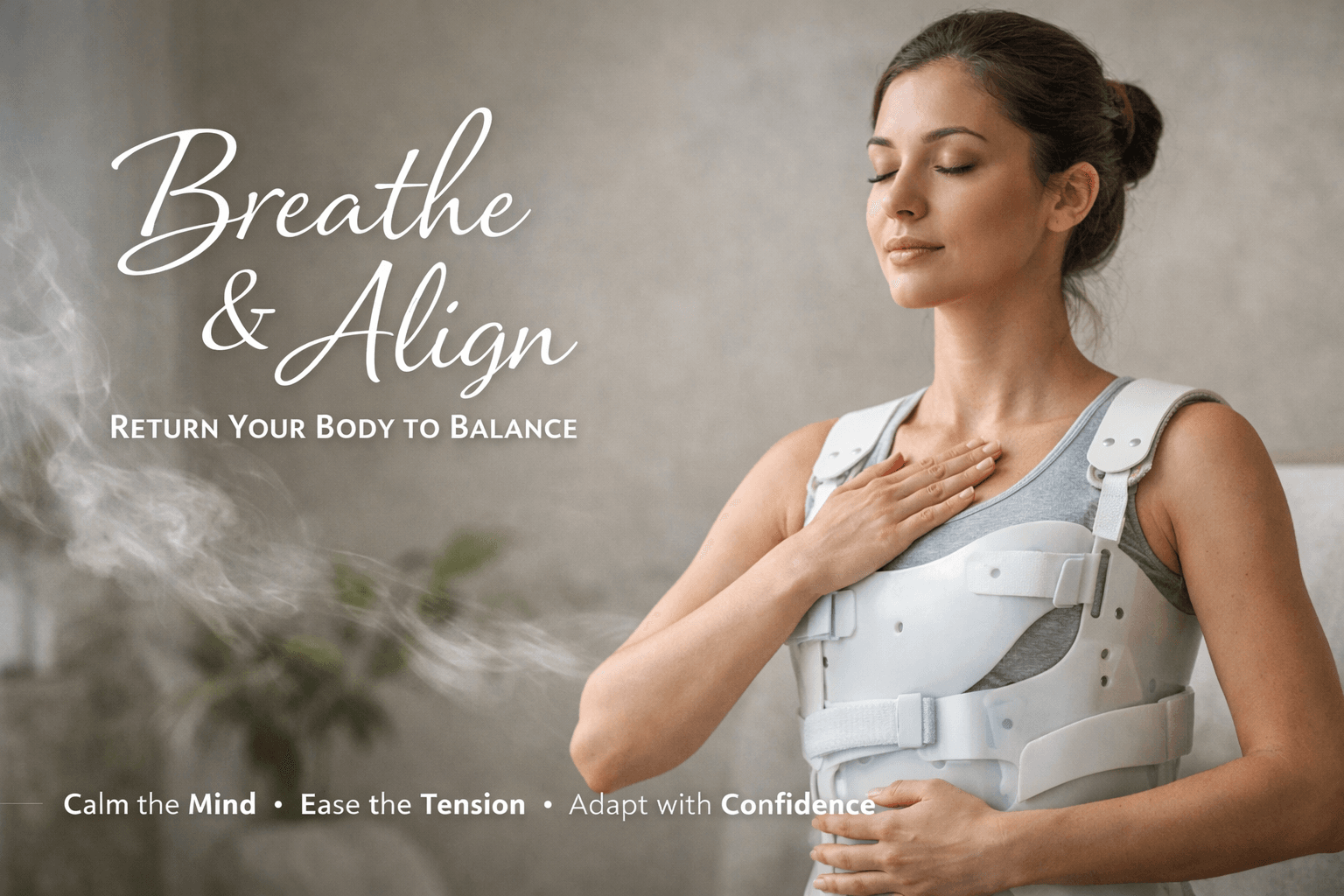
When we talk about longevity, most people think about diet, exercise, supplements, or genetics. But one of the most overlooked foundations of long-term health is body adaptability—your body’s ability to respond to stress and then return to baseline.
Adaptability is not about avoiding stress. Stress is inevitable—and necessary. What truly matters is how efficiently your body down-regulates after adapting.
When adaptability is reduced:
-
Stress responses stay elevated longer
-
Inflammatory processes do not fully resolve
-
Metabolic signals become rigid
-
The nervous system remains overstimulated
Over time, this state of poor regulation is associated with higher disease risk, slower healing, chronic pain, fatigue, and reduced resilience—especially in individuals managing long-term structural changes such as scoliosis or brace correction.
Adaptability Is a Skill, Not Just a Trait
Physiological flexibility allows the body to:
-
Respond appropriately to physical, emotional, or mechanical stress
-
Adjust to new demands (exercise, posture, braces, schedules)
-
Efficiently return to a regulated baseline
When adaptability is high, the body knows how to turn stress responses off.
When adaptability is low, the body gets “stuck”:
-
Staying inflamed
-
Remaining metabolically rigid
-
Holding excessive muscle tone
-
Staying in fight-or-flight mode
This is why longevity is not only about what you do—but also about how you recover from what you do.
Once a Day: Practice Returning to Baseline
At least once daily, deliberately practice coming down after something mildly demanding.
This could be:
-
A workout
-
A busy school or work schedule
-
Wearing a new brace
-
A difficult conversation
-
Mental or emotional strain
The goal is not passive rest.
The goal is teaching your body how to regulate after adapting.
Spend 5 minutes doing one of the following.
1. Slow Breathing to Re-Set the Nervous System
Slow breathing is one of the most direct ways to communicate safety to the nervous system. It shifts the body out of stress mode and back into regulation.
How Slow Breathing Works (Especially for Brace Wearers)
When adjusting to a new brace, the body often perceives:
-
Pressure
-
Postural change
-
Constraint
This can trigger unconscious tension or resistance.
Breathing meditation helps by:
-
Reducing muscle guarding
-
Allowing the rib cage to adapt to new alignment
-
Teaching the nervous system that the corrective posture is safe
How to Practice (5 Minutes)
-
Sit or stand comfortably with your brace on
-
Inhale slowly through the nose for 4–5 seconds
-
Exhale gently through the nose or mouth for 6–7 seconds
-
Let the breath feel quiet and unforced
-
Allow the body to soften into the brace rather than away from it
As you breathe, hold this internal belief (not forced—just gentle):
_“This correction is for my own good.
My body knows how to adapt.
I am safe in this posture.”_
This mindset reduces internal resistance and allows neuromuscular adaptation to happen more efficiently.
2. Take a Short, Low-Intensity Walk
Walking is one of the most powerful regulation tools—especially when done slowly and intentionally.
For Scoli-Warriors: Walk With Your Brace On
Rather than avoiding movement, use walking to acclimate your body to its new corrective posture.
Benefits include:
-
Gentle spinal loading
-
Improved circulation
-
Reduced stiffness
-
Better postural integration
How to Practice
-
Walk for 5–10 minutes
-
Keep the pace relaxed (you should be able to breathe through your nose)
-
Let your arms swing naturally
-
Feel how the brace supports and guides your alignment
This teaches your body:
“This posture is functional. This posture is safe.”
3. Sit Without Stimulation and Let the Body Come Down Naturally
True regulation does not always come from distraction.
Sometimes, the most powerful practice is stillness with awareness.
How to Practice
-
Sit quietly without phone, music, or screens
-
Keep your brace on if applicable
-
Bring attention to your breathing
-
Imagine the brace doing its job—
correcting slowly, steadily, and gently
-
Let tension dissolve without forcing relaxation
This is not about “doing nothing.”
It is about allowing the nervous system to recalibrate.
The Goal Is Not Relaxation Alone
Relaxation is a byproduct—not the objective.
The real aim is to:
-
Teach your body how to down-regulate after adapting
-
Improve physiological flexibility
-
Build resilience across the nervous, muscular, and metabolic systems
This skill compounds over time.
A body that adapts well ages better, heals faster, and performs more consistently—even under corrective forces like bracing.
Longevity Is Built in the Return
Stress is unavoidable. Adaptation is necessary.
But longevity is built in the return to baseline.
By intentionally practicing regulation—especially after physical correction, mental demand, or emotional strain—you are training your body to become more adaptable, not less.
And adaptability, over time, becomes one of the most powerful predictors of long-term health, spine resilience, and quality of life.