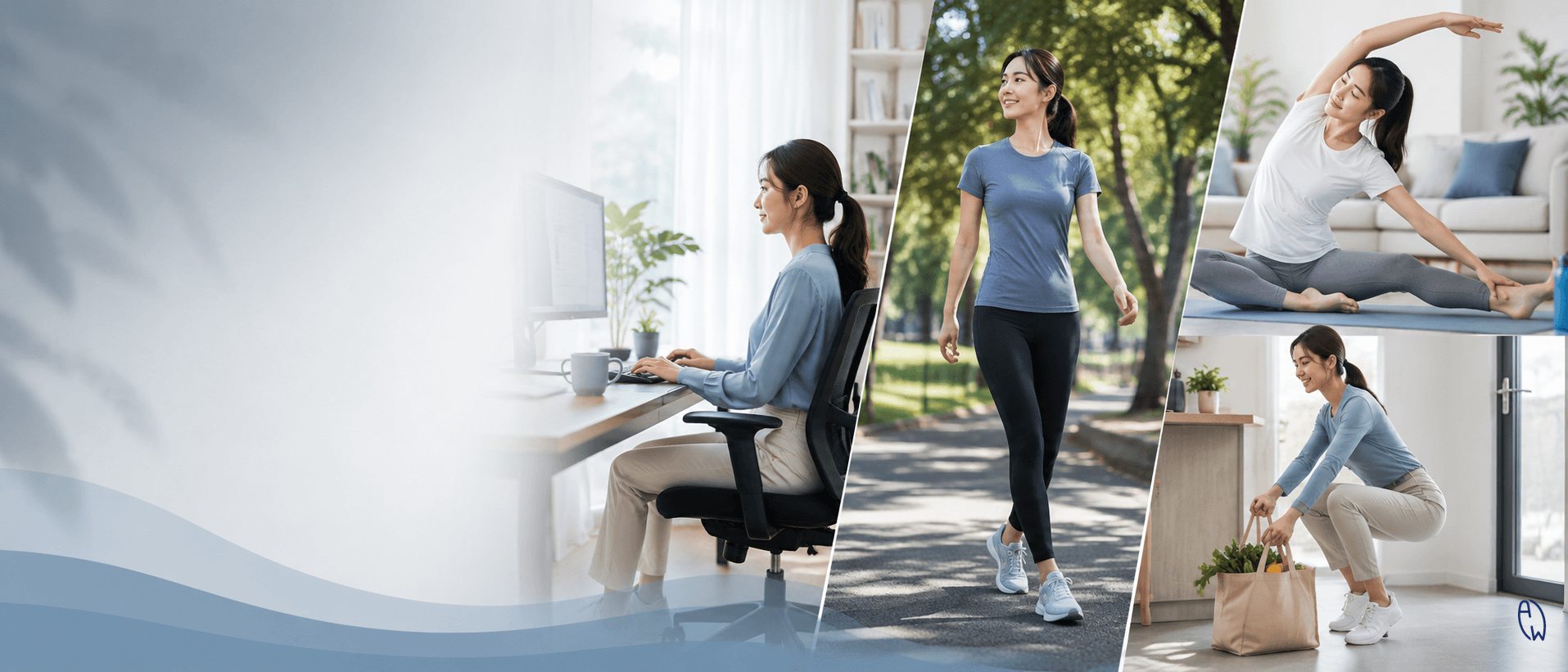
Lifestyle Adjustments for Scoliosis: Small Changes That Support a Healthier Spine
Receiving a diagnosis of scoliosis often raises many questions.
"Can I still exercise?"
"Should I avoid certain activities?"
"Will my daily habits make my scoliosis worse?"
The good news is that, for most people, living well with scoliosis is not about avoiding life—it's about making thoughtful, sustainable adjustments that support your spine and your overall health.
While no lifestyle change can permanently correct a structural spinal curve, your daily habits play a significant role in how your body functions. The way you sit, move, sleep, exercise, lift, and recover can influence muscle fatigue, joint mobility, balance, and even how comfortable you feel throughout the day.
At All Well Scoliosis Centre, we encourage patients to think beyond the X-ray. Successful scoliosis management isn't built around a single treatment session—it is supported by hundreds of healthy choices made consistently over time.
Scoliosis Is More Than a Curved Spine
Most people associate scoliosis with the sideways curvature seen on an X-ray. However, scoliosis is a complex three-dimensional condition that affects much more than the bones.
Depending on the individual, scoliosis may influence:
-
Muscle balance
-
Joint mobility
-
Breathing mechanics
-
Balance and coordination
-
Postural control
-
Walking efficiency
-
Energy expenditure
-
Fatigue
-
Everyday movement
This explains why two people with similar Cobb angles can experience completely different symptoms.
Some individuals have very little discomfort despite a larger curve, while others experience muscle tightness, fatigue, or back pain with a relatively smaller curve.
Because every person is different, lifestyle recommendations should always be individualised.
Can Small Lifestyle Changes Really Help?
Absolutely.
Think of your body as an interconnected system.
Your spine works together with your muscles, joints, nervous system, breathing, and balance mechanisms every second of the day. When one part functions more efficiently, the entire system often performs better.
Many patients notice improvements after adopting healthier daily habits, including:
-
Reduced muscle tension
-
Less back fatigue
-
Better posture awareness
-
Improved flexibility
-
Greater endurance
-
Better balance
-
Easier movement during everyday activities
-
Improved confidence
These improvements may not happen overnight, but consistent habits often produce meaningful long-term results.
1. Keep Moving Every Day
One of the biggest myths about scoliosis is that people should avoid exercise.
In reality, prolonged inactivity often contributes to stiffness, muscle weakness, and reduced endurance.
Regular movement helps:
-
Maintain spinal mobility
-
Improve circulation
-
Strengthen supporting muscles
-
Reduce joint stiffness
-
Improve coordination
-
Support healthy bone density
-
Promote overall wellbeing
The best exercise is one you enjoy and can perform consistently.
Examples include:
-
Walking
-
Swimming
-
Cycling
-
Resistance training
-
Pilates with appropriate modifications
-
Yoga under professional guidance
-
Scoliosis-specific rehabilitation exercises
Consistency is far more important than intensity.
Even a daily 20 to 30-minute walk can have significant long-term benefits.
2. Build Strength—Especially Around the Spine
Your spine relies on strong, coordinated muscles for support.
This includes much more than your abdominal muscles.
Important muscle groups include:
-
Deep core muscles
-
Back extensors
-
Gluteal muscles
-
Hip stabilisers
-
Diaphragm
-
Pelvic floor
These muscles work together to improve spinal stability and movement efficiency.
For people with scoliosis, strengthening exercises should be personalised rather than copied from general fitness programmes.
3. Avoid Staying in One Position for Too Long
Modern lifestyles encourage prolonged sitting.
Whether working in an office, studying, driving, or using electronic devices, remaining in one position for hours places continuous stress on muscles and joints.
Instead, make movement part of your routine.
Simple strategies include:
-
Standing every 30 to 60 minutes
-
Walking for a few minutes
-
Performing gentle stretches
-
Alternating between sitting and standing
-
Changing positions regularly
Your body is designed to move—not remain perfectly still.
4. Create an Ergonomic Workspace
Many adults spend most of their working day at a computer.
A well-designed workstation helps reduce unnecessary strain.
Aim for:
-
Monitor at eye level
-
Feet supported on the floor
-
Relaxed shoulders
-
Elbows close to the body
-
Wrists in a neutral position
-
A chair that supports natural spinal alignment
However, remember that even the best ergonomic chair cannot replace regular movement.
Good posture is dynamic, not static.
5. Lift Smarter, Not Harder
Daily activities such as carrying groceries, lifting children, or moving luggage can increase stress on the spine when performed incorrectly.
Whenever possible:
-
Bend through your hips and knees
-
Keep objects close to your body
-
Avoid twisting while lifting
-
Turn your whole body instead of rotating only your spine
-
Ask for assistance with heavy loads
Small adjustments in lifting technique can significantly reduce unnecessary strain.
6. Prioritise Quality Sleep
Sleep is when your body repairs and recovers.
Poor sleep can increase muscle tension, fatigue, and pain sensitivity.
Many people with scoliosis find comfort by:
-
Sleeping on their back with a pillow beneath the knees
-
Sleeping on their side with a pillow between the knees
-
Using a supportive mattress
-
Choosing a pillow that keeps the neck comfortably aligned
There is no single "perfect" sleeping position for scoliosis.
The best position is one that allows you to wake feeling rested and comfortable.
7. Eat to Support Your Spine
Nutrition cannot straighten a spinal curve, but it plays an essential role in supporting overall musculoskeletal health.
A balanced diet should include:
-
High-quality protein for muscle repair
-
Calcium-rich foods for bone health
-
Vitamin D to support calcium absorption
-
Colourful fruits and vegetables
-
Healthy fats
-
Whole grains
Maintaining a healthy body weight also reduces unnecessary stress on the spine, hips, knees, and feet.
8. Learn to Balance Activity and Rest
One common mistake is doing too much on good days and becoming completely inactive on difficult days.
Instead, aim for consistency.
Healthy pacing may include:
-
Daily movement
-
Planned rest breaks
-
Regular stretching
-
Strength exercises several times each week
-
Gradually increasing activity levels
Your body generally responds better to moderate, consistent activity than occasional bursts of intense exercise.
9. Manage Stress
Living with chronic discomfort can be mentally exhausting.
Stress may increase muscle tension, disrupt sleep, and heighten pain perception.
Helpful strategies include:
-
Deep breathing exercises
-
Walking outdoors
-
Mindfulness
-
Gentle stretching
-
Reading
-
Spending time with family and friends
Looking after your mental wellbeing is an important part of looking after your spine.
10. Stay Consistent With Your Home Exercise Programme
Many people expect dramatic improvements after exercising for a few days.
In reality, scoliosis rehabilitation relies on repetition and consistency.
Short daily sessions are often more effective than long sessions completed only occasionally.
Think of exercise as part of your daily routine, much like brushing your teeth.
Lifestyle Changes Work Best as Part of a Comprehensive Scoliosis Management Plan
Healthy habits provide an excellent foundation, but lifestyle adjustments are only one part of comprehensive scoliosis care.
Depending on your age, spinal curve, symptoms, and treatment goals, a personalised management plan may also include:
-
CLEAR Protocol®, which combines neurological rehabilitation, spinal mobility, postural retraining, and customised exercises to improve spinal function.
-
ScoliBalance®, a physiotherapeutic scoliosis-specific exercise programme designed to improve posture, muscle symmetry, breathing, balance, and long-term spinal stability.
-
ScoliBrace®, a custom-designed three-dimensional corrective brace that helps guide spinal growth in adolescents and supports improved alignment in selected adults when clinically appropriate.
At All Well Scoliosis Centre, these approaches are integrated according to each patient's individual needs. Rather than relying on a single treatment, we believe the best outcomes come from combining evidence-based rehabilitation, targeted exercise, corrective bracing where indicated, and long-term lifestyle habits that patients can realistically maintain.
Small Habits Create Lasting Results
Living with scoliosis is not about finding one perfect solution.
It is about building a healthier lifestyle that supports your spine every single day.
Walking regularly.
Strengthening your muscles.
Sleeping well.
Eating nutritious foods.
Moving more often.
Managing stress.
Completing your home exercises.
These small decisions may seem insignificant on their own, but together they help improve mobility, reduce fatigue, and support long-term spinal health.
For many people, the goal is not simply to manage scoliosis—it is to continue enjoying work, family, hobbies, travel, and the activities that matter most.
With the right combination of healthy lifestyle habits, personalised rehabilitation, and ongoing professional guidance, many people with scoliosis can remain active, independent, and confident throughout every stage of life.
Frequently Asked Questions
Can lifestyle changes reduce scoliosis?
Lifestyle changes cannot permanently correct a structural scoliosis curve. However, they can improve posture, muscle strength, flexibility, balance, comfort, and overall quality of life.
What is the best exercise for scoliosis?
There is no single best exercise for everyone. Walking, swimming, resistance training, and scoliosis-specific rehabilitation programmes such as ScoliBalance® may all be beneficial when tailored to the individual.
Should people with scoliosis avoid exercise?
In most cases, no. Remaining physically active helps maintain muscle strength, cardiovascular fitness, and spinal mobility. Your exercise programme should always be appropriate for your individual condition.
Is sitting bad for scoliosis?
Sitting itself is not harmful, but sitting in the same position for prolonged periods may increase muscle fatigue and stiffness. Regular movement breaks are recommended.
Can lifestyle changes replace professional treatment?
Lifestyle habits are an important part of scoliosis management but should not replace professional assessment or treatment when indicated. Depending on the individual, comprehensive care may include scoliosis-specific rehabilitation using the CLEAR Protocol®, ScoliBalance® exercises, ScoliBrace®, and regular clinical monitoring.