Experiencing Heaviness in Both Legs? Understanding Lumbar Stenosis & How to Recover Safely
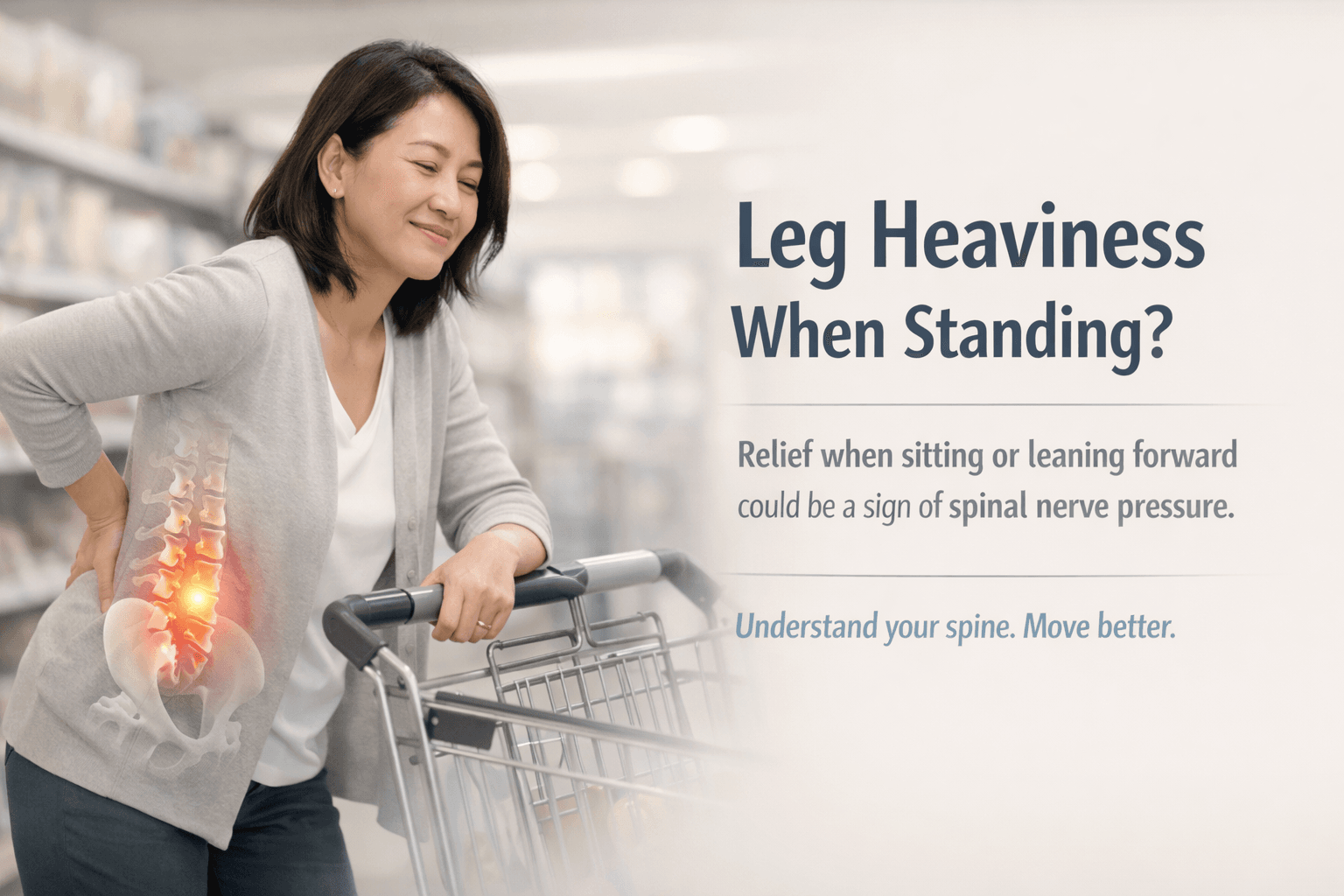
If you’ve ever felt a deep heaviness, fatigue, or discomfort in both legs when standing or walking, only to feel instant relief when sitting or leaning forward—this could be a sign of Lumbar Spinal Stenosis.
This condition is more common than most people realize—and often misunderstood.
What Is Lumbar Spinal Stenosis?
Lumbar spinal stenosis refers to the narrowing of the spinal canal in the lower back, which places pressure on the spinal nerves. This compression can lead to:
-
Leg heaviness or fatigue
-
Pain when standing or walking
-
Numbness or tingling in the legs
-
Relief when sitting or bending forward
A classic example?
Feeling better when leaning over a shopping cart.
Important: Imaging Does NOT Always Equal Pain
Here’s something many patients don’t hear enough:
👉 20–30% of people show signs of lumbar stenosis on imaging (like X-rays or MRI)… but have ZERO symptoms.
This means:
-
Your scan is just one piece of the puzzle
-
Pain is influenced by movement, strength, and biomechanics—not just structure
Why Movement Matters More Than Rest
If you’ve strained your lower back, your instinct might be to lie down and avoid movement.
That’s actually the wrong approach.
Research consistently shows that gentle movement is one of the best early interventions for low back pain. Prolonged rest can:
-
Stiffen joints
-
Weaken muscles
-
Delay recovery
👉 Instead, start with walking and controlled movements to keep your body active.
Early Phase Recovery (Acute Flare-Up)
When pain is fresh, the goal is activation and stability—not intensity.
1. Abdominal Bracing
Engages your core—especially the obliques—to support your spine.
2. Abdominal Hollowing
Targets the deep stabilizer muscle:
👉 the transversus abdominis, crucial for spinal support.
3. Cat-Cow Movement
Gently restores spinal mobility and reduces stiffness.
These movements help your body reconnect with proper muscle activation, laying the foundation for recovery.
Mid-Phase Recovery (When Pain Starts Improving)
As your pain decreases, your focus should shift to:
👉 Rebuilding strength + increasing movement capacity
The key principle here:
Do not fear movement—gradually reintroduce it.
Essential Exercises:
Hip Hinge (Foundational Movement)
Retrains how you bend in daily life and the gym.
Supermans
Strengthens the lower back extensors and improves extension control.
Modified Side Plank with Clamshell
Targets:
-
Obliques
-
Hip stabilizers
Both are critical for spinal support.
Bird Dogs
Builds lumbar stability.
⚠️ Keep your pelvis stable—no twisting.
Curl-UP
A deceptively simple movement that challenges:
-
Core control
-
Hip stability
Can Exercise Help Lumbar Stenosis?
Let’s be clear:
👉 These exercises do NOT change the anatomy of spinal narrowing.
But they DO:
-
Improve biomechanics
-
Reduce pressure on the spine
-
Increase muscular support
-
Enhance daily function
For example, movements like the Romanian Deadlift (RDL) can:
-
Strengthen the hamstrings
-
Encourage a slight posterior pelvic tilt
-
Potentially create more functional space in the spinal canal
The Real Goal: Build Capacity, Not Avoid Pain
Recovering from low back pain or lumbar stenosis is not about avoiding movement forever.
It’s about:
-
Gradually increasing your tolerance
-
Improving strength and control
-
Restoring confidence in your body
This is a journey, not a quick fix.
When Should You Seek Help?
If you experience:
-
Persistent leg heaviness
-
Pain that limits walking or standing
-
Recurring flare-ups
It’s worth getting assessed by a qualified professional who understands both:
-
Structural findings
-
Functional movement patterns
Final Thought
Your spine is stronger and more adaptable than you think.
Even with a diagnosis like Lumbar Spinal Stenosis, the right combination of:
-
Movement
-
Strength
-
Progressive loading
can help you return to a pain-free, active lifestyle.