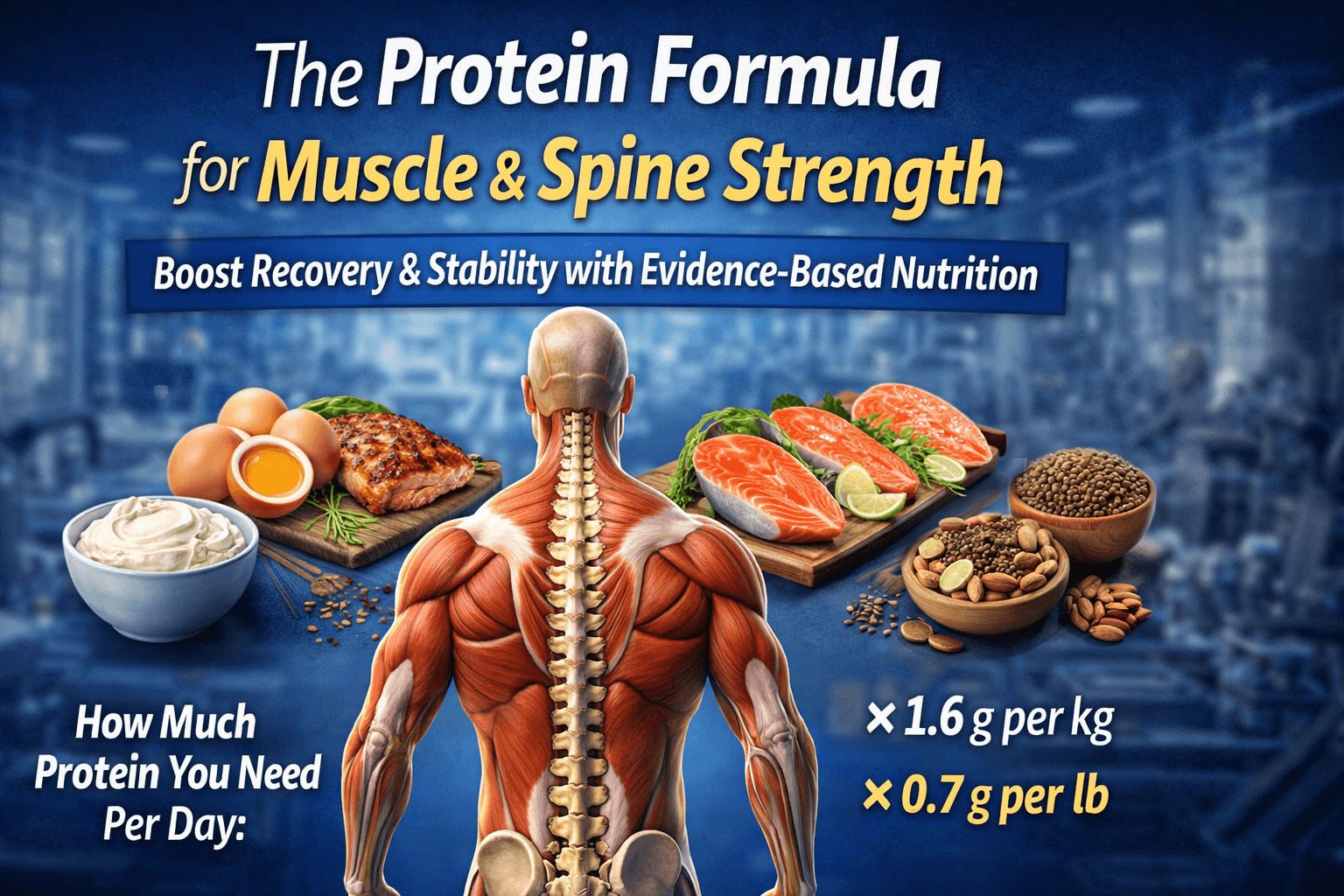
For spine health and muscle recovery, the best protein sources are nutrient-dense whole foods that provide not only amino acids for muscle repair but also minerals that support bones, discs, and connective tissues.
Below are some of the most effective whole-food protein sources to support spinal stability, muscle rebuilding, and recovery from training or rehabilitation.
Best Whole Food Protein Sources for Spine Health & Muscle Recovery
1. Eggs – The Gold Standard Protein
Egg
Eggs are one of the most complete proteins in nature.
Why they’re powerful:
-
Contain all 9 essential amino acids
-
High in leucine, which stimulates muscle protein synthesis
-
Provide vitamin D and choline, important for bone and nerve health
Protein content:
~6–7 g per egg
Eggs are particularly valuable for people recovering from training, spinal rehab, or surgery because they are highly bioavailable.
2. Fatty Fish – Protein + Anti-Inflammatory Support
Salmon
Sardine
Tuna
Fatty fish provide both high-quality protein and omega-3 fatty acids.
Benefits for the spine:
-
Reduce inflammation around joints and discs
-
Support connective tissue repair
-
Provide vitamin D for bone density
Protein content:
~20–25 g per 100 g serving
For spinal health, fish like salmon and sardines are among the best foods you can eat regularly.
3. Lean Meat – Dense Protein for Muscle Repair
Chicken
Beef
Turkey
Lean meats are excellent for building the structural muscles that support the spine.
Key nutrients:
-
High-quality protein
-
Iron for oxygen delivery
-
Creatine for strength
-
Zinc for tissue repair
Protein content:
~22–27 g per 100 g
These foods are ideal for people doing progressive resistance training or sports like HYROX.
4. Greek Yogurt & Cottage Cheese – Slow-Release Recovery Protein
Greek Yogurt
Cottage Cheese
Dairy proteins contain casein, a slow-digesting protein that supports recovery for hours.
Benefits:
-
Sustained muscle repair
-
High calcium for bone health
-
Supports overnight recovery
Protein content:
-
Greek yogurt: ~10 g per 100 g
-
Cottage cheese: ~11 g per 100 g
These are excellent evening recovery foods.
5. Legumes & Plant Proteins – Muscle + Gut Health
Lentil
Chickpea
Quinoa
Plant proteins also play an important role in a balanced diet.
Advantages:
-
High fiber for metabolic health
-
Rich in magnesium for muscle function
-
Support gut microbiome
Protein content:
~8–18 g per serving depending on the source.
Although plant proteins are slightly less anabolic than animal proteins, combining different sources creates complete amino acid profiles.
6. Nuts & Seeds – Supportive Protein + Minerals
Almond
Chia Seed
Pumpkin Seed
These foods contain moderate protein but excellent micronutrients for spine support.
Important nutrients:
-
Magnesium for muscle contraction
-
Zinc for recovery
-
Healthy fats for inflammation control
Protein content:
~5–9 g per serving
They work best as supportive foods alongside larger protein meals.
Why These Foods Matter for the Spine
Your spine relies on strong supporting muscles, ligaments, and connective tissue.
Adequate protein intake helps:
-
Build postural muscles
-
Repair micro-damage from training
-
Support bone density
-
Improve recovery from rehabilitation exercises
Without enough protein, even the best exercise program will produce limited progress.
Simple Daily Protein Example (70 kg person)
Target: 112–154 g protein per day
Example day:
Breakfast
- Eggs + Greek yogurt → 40 g
Lunch
- Chicken breast + quinoa → 45 g
Snack
- Protein shake → 25 g
Dinner
- Salmon + vegetables → 40 g
Total: ~150 g protein
This is enough to support muscle growth, spinal stability, and recovery.
Key takeaway:
The best strategy is not relying on one protein source, but combining animal proteins, dairy, fish, and plant sources to support long-term health and performance.
Medical Disclaimer
This article is for educational purposes only and does not constitute medical advice.
Scoliosis varies significantly between individuals. Always consult a qualified healthcare professional before starting any new sport or exercise program, especially if you have scoliosis, spinal conditions, pain, or previous injuries. Participation in sports should be guided by individual assessment and professional recommendation.
The image is shared for educational purposes with patient consent. Individual outcomes vary. Structural correction does not automatically restore full respiratory function. Clinical assessment is required.
Copyright & Content Protection Notice
© 2026 All Well Scoliosis Centre. All rights reserved.
This content is original and protected by copyright law.
No part of this article may be reproduced, distributed, copied, or reused in any form without prior written permission. Unauthorized use, duplication, or content scraping is strictly prohibited.