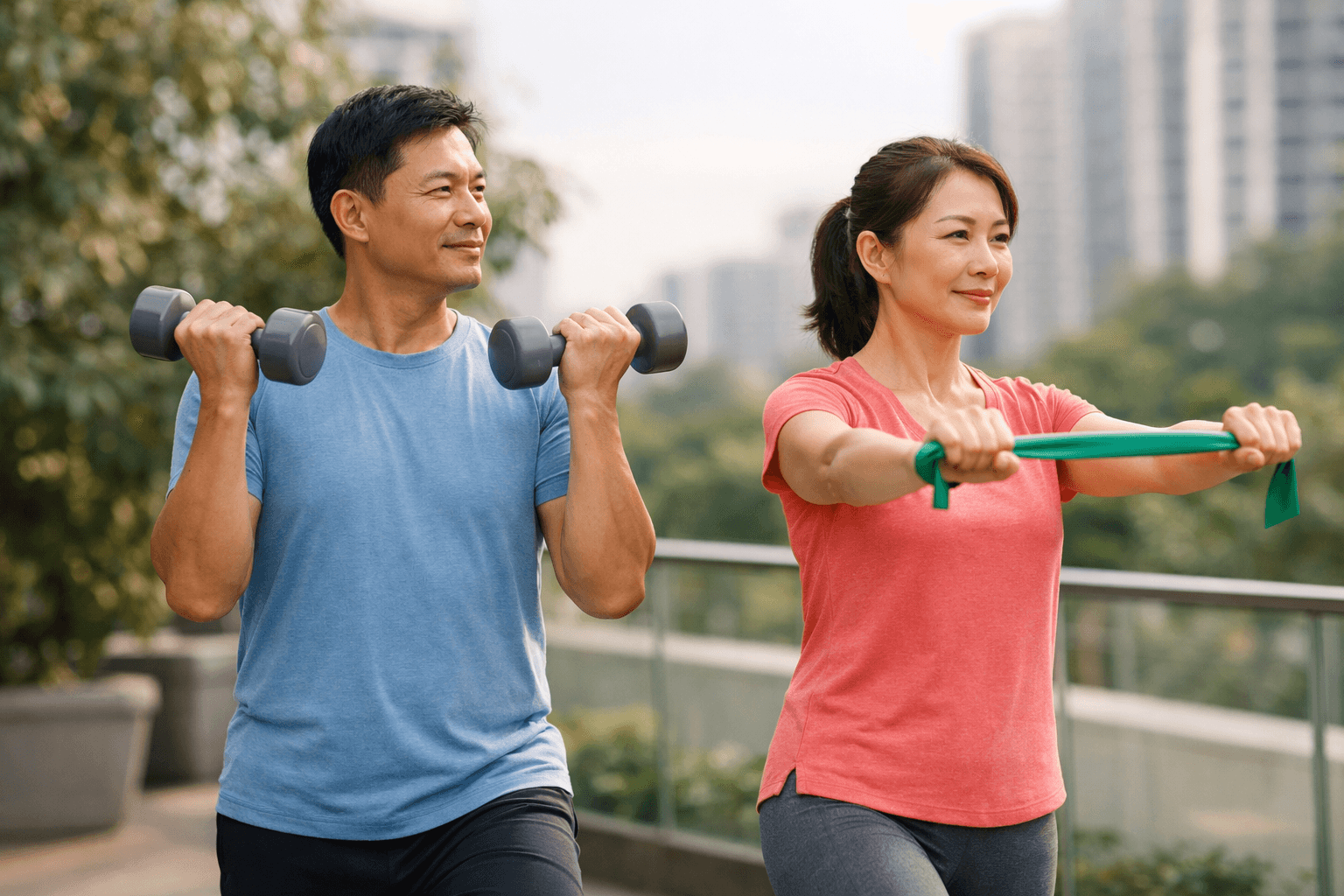
Stay Active in Your 40s: You’re Building the Strength Your 70- and 80-Year-Old Self Will Depend On
Many adults believe muscle loss is something to worry about later — in their 60s or after retirement. The truth is far more urgent and empowering: what you do in your 40s and 50s determines how strong, independent, and mobile you’ll be in your 70s and 80s.
Muscle does not magically appear when we need it. It takes time, consistency, and habit to build. Whatever strength you develop from your 40s onward is not just for today — you’re banking muscle for your future self.
Muscle Atrophy Starts Earlier Than You Think
Muscle atrophy doesn’t suddenly begin at old age. Without regular movement and resistance, adults can start losing muscle mass as early as their 30s. By your 40s, the process accelerates — especially if your lifestyle is mostly sedentary.
The reality is simple:
-
Building muscle in your 40s is already slower than in your 20s
-
Waiting until retirement age makes it significantly harder
-
Regaining lost muscle later in life is far more difficult than maintaining it earlier
This is why starting early matters.
Your 40s and 50s Are Still Your Prime
Your 40s and 50s are a unique window of opportunity. While hormonal changes begin — including a gradual decline in reproductive and growth-related hormones — your body is still highly capable of adapting, strengthening, and recovering.
Staying active during this stage helps:
-
Slow down age-related muscle loss
-
Support joint health and bone density
-
Maintain balance and coordination
-
Improve metabolic health and digestion
-
Preserve energy, confidence, and independence
You cannot stop aging — but you can slow how fast your body declines.
Why Retirement Age Keeps Moving Up in Singapore
Many people assume retirement age keeps increasing because governments don’t want people to retire. The deeper truth is this: remaining active is essential for long-term health, not just economic productivity.
A body that keeps moving:
-
Functions better
-
Recovers faster
-
Requires less medical intervention later
-
Remains independent for longer
Staying active is not punishment — it’s protection.
Sitting Feels Easier, But It Ages You Faster
A common misconception is:
“I’m less tired sitting at my desk than moving my body.”
In reality, prolonged sitting does the opposite of rest.
When you sit for long hours:
-
Muscles weaken and shorten
-
Circulation slows
-
Digestion becomes sluggish
-
Internal systems become inefficient — almost “sticky”
-
Food is processed more slowly, leading to inflammation and fatigue
Movement keeps your internal systems flowing. Stillness accelerates aging far more than controlled activity ever will.
The Right Balance: Strength, Stretching, and Cardio
To build muscle and protect your heart, balance is essential.
Your routine should include:
-
Strength training to preserve and build muscle
-
Stretching and mobility to maintain joint range and reduce stiffness
-
Cardiovascular activity to keep your heart, lungs, and circulation healthy
This combination helps your organs move without strain and builds habits your body can sustain long term.
Don’t Overdo It — This Is Not a Competition
One of the biggest mistakes adults make is treating exercise like a race.
This is not about:
-
Competing with others
-
Chasing extremes
-
Punishing your body
This is about:
-
Enjoyment
-
Consistency
-
Listening to your body
-
Building habits you can keep for decades
You know your body better than anyone else. Be honest with yourself. Progress does not need to be loud to be effective.
The Habits You Build Now Will Carry You Later
Every small choice matters:
-
Choosing to move today
-
Choosing to stretch
-
Choosing to walk instead of sit
-
Choosing consistency over intensity
You may not see dramatic changes immediately — but your future self will feel the difference.
I may sound repetitive reminding everyone to start early, but it’s because this truth is often ignored until it’s too late. The effort you put in now is the freedom you enjoy later.
Start early. Stay true to yourself. Keep it enjoyable.
Your 70- and 80-year-old body is depending on you — today.
Medical Disclaimer
This article is for educational purposes only and does not constitute medical advice.
Scoliosis varies significantly between individuals. Always consult a qualified healthcare professional before starting any new sport or exercise program, especially if you have scoliosis, spinal conditions, pain, or previous injuries. Participation in sports should be guided by individual assessment and professional recommendation.
Copyright & Content Protection Notice
This content is original and protected by copyright law.
No part of this article may be reproduced, distributed, copied, or reused in any form without prior written permission. Unauthorized use, duplication, or content scraping is strictly prohibited.
© 2026 All Well Scoliosis Centre. All rights reserved.