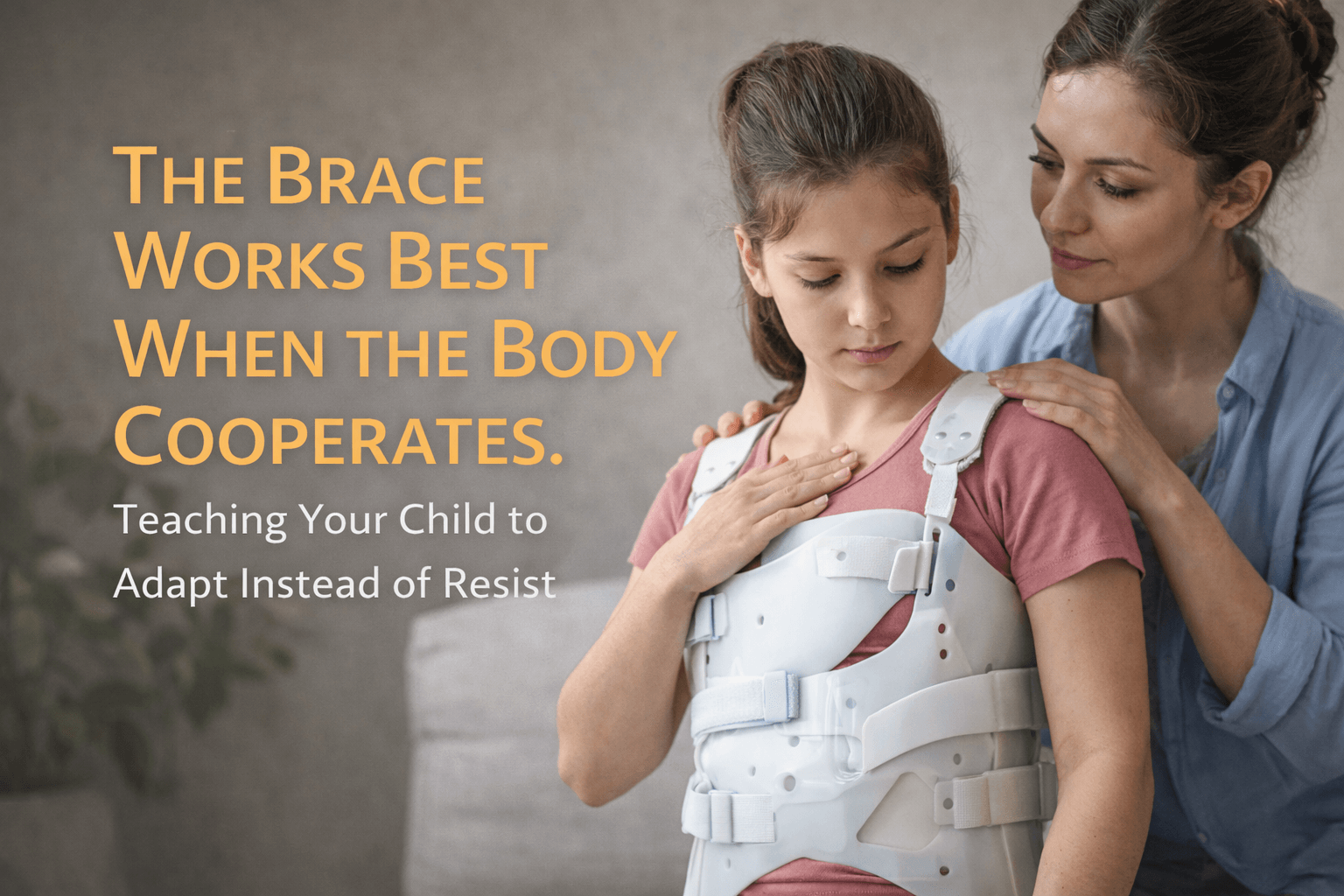
For Parents of Children in Braces: Helping Your Child Adapt, Regulate, and Thrive
When a child starts wearing a scoliosis brace, the physical correction is only one part of the journey. The other—often overlooked—part is how well their body and nervous system adapt to the change.
Children’s bodies are highly adaptable, but they still need guidance to learn how to regulate after new physical demands. Without this, stress responses may stay elevated longer, affecting comfort, compliance, and overall well-being.
Helping your child return to baseline each day supports:
-
Better brace tolerance
-
Reduced muscle tension and fatigue
-
Improved emotional regulation
-
Healthier long-term spinal adaptation
This process is especially important during growth spurts, school stress, and early brace wear.
Why Adaptability Matters in Pediatric Scoliosis Bracing
When adaptability is reduced in children:
-
Muscle tension stays high
-
Breathing becomes shallow
-
Inflammatory responses may linger
-
The brace feels more uncomfortable than it needs to be
Over time, this can lead to:
-
Resistance to wearing the brace
-
Increased emotional distress
-
Reduced compliance with treatment
Teaching your child how to down-regulate after adapting helps their body accept correction more naturally.
A Simple Daily Regulation Routine for Children in Scoliosis Braces
Just 5 minutes a day can make a meaningful difference.
1. Breathing Practice While Wearing the Brace
Breathing is one of the safest and most effective tools for helping a child’s nervous system feel secure in a new posture.
How parents can guide this:
-
Have your child sit comfortably with the brace on
-
Ask them to place one hand on their chest and one on their belly
-
Encourage slow breathing through the nose
Simple count for children:
-
Inhale for 4 seconds
-
Exhale for 6 seconds
You can gently say:
“Let your body soften into the brace. It’s helping you grow stronger.”
This helps the body:
-
Reduce internal resistance
-
Improve rib cage mobility
-
Accept corrective posture with less tension
Helping Your Child Build a Positive Belief About the Brace
A child’s belief system directly affects adaptability.
When a brace is seen as something “bad” or “punishing,” stress responses increase. When it’s framed as supportive and protective, the body adapts more smoothly.
Encourage simple, age-appropriate affirmations:
-
“This brace is helping my spine grow better.”
-
“My body knows how to adjust.”
-
“I am safe and supported.”
This mindset supports neurological acceptance of correction, not just physical compliance.
Walking With the Brace On: Gentle Movement That Supports Adaptation
Low-intensity walking helps children integrate their new posture into daily life.
Encourage:
-
Short walks after school or in the evening
-
Relaxed pace (no rushing)
-
Natural arm swing
Walking with the brace on helps:
-
Reduce stiffness
-
Improve circulation
-
Teach the body that correction is functional
This is not exercise—it is acclimation.
Quiet Time Without Screens: Teaching the Body to Settle
Children are often overstimulated, especially after school.
Set aside 5 minutes of quiet sitting:
-
No devices
-
Focus on breathing
-
Brace stays on
Ask your child to imagine:
“The brace is gently guiding the spine, slowly and safely.”
This allows the nervous system to come down naturally and reduces emotional overwhelm.
The Long-Term Goal: Resilient, Adaptable Bodies
Scoliosis treatment is not just about curves and X-rays—it’s about raising children who:
-
Trust their bodies
-
Adapt well to physical change
-
Recover efficiently from stress
By teaching your child how to regulate after adapting, you support not only brace success, but lifelong resilience and spine health.