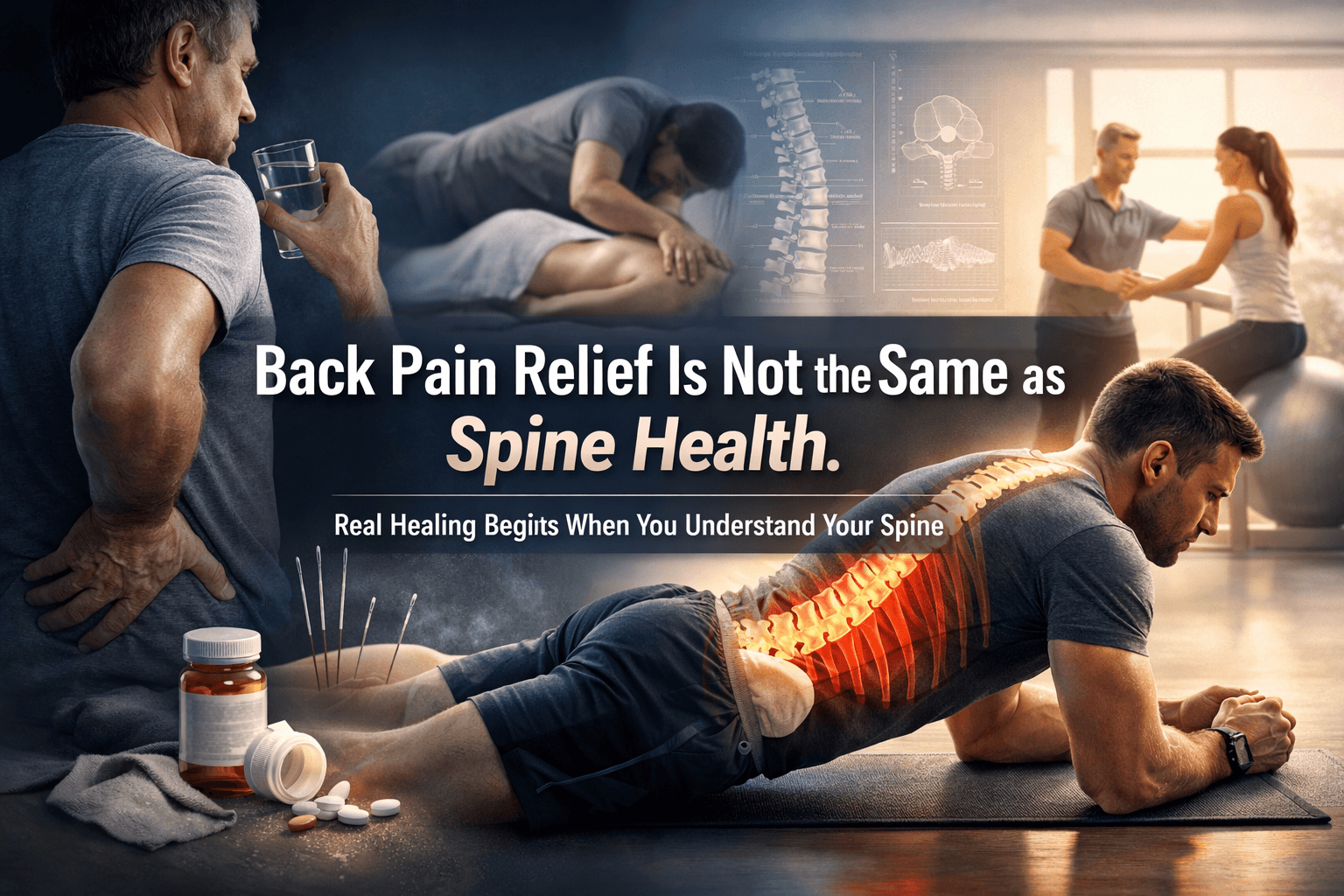
The Truth About Back Pain: What Peter Attia and Leading Spine Experts Say About Aging Gracefully
Back Pain Is Not Just a Symptom — It Is a Signal
Back pain is one of the most common health problems in the world. Millions of people suffer from it every day, yet most treat it only at the surface.
They take painkillers.
They get a quick massage.
They visit a physiotherapist for 30 minutes.
For a short time, the pain may reduce. But after a few weeks or months, the pain returns.
Why?
Because the real cause was never addressed.
According to longevity physician Peter Attia, the modern approach to health must move beyond symptom management and toward understanding the root causes of dysfunction in the body.
Attia often describes this philosophy as “Medicine 3.0” — focusing on preventing decline decades before it becomes irreversible.
This principle is especially important when it comes to spine health and back pain.
The Spine Is a Complex Structure — Not Just a Source of Pain
The human spine is a remarkable engineering structure made of:
-
vertebrae
-
discs
-
ligaments
-
muscles
-
nerves
Together they form a flexible column that allows humans to bend, walk, rotate, and absorb force.
But this flexibility comes with a trade-off.
As spine biomechanist Stuart McGill explains in his discussion with Attia:
“The spine is a series of vertebrae forming a flexible rod… every system in your body comes with a trade-off.”
This flexibility allows movement — but it also means the spine is vulnerable to poor mechanics, repetitive stress, and bad daily habits.
When people ignore these factors, pain eventually appears.
Why Quick Fixes Rarely Solve Back Pain
One of the biggest misconceptions about back pain is the belief that temporary relief equals healing.
Many people rely on:
-
painkillers
-
massage
-
acupuncture
-
occasional physiotherapy
-
stretching routines
These treatments can help reduce symptoms. But if the underlying biomechanics and lifestyle habits remain unchanged, the pain will return.
This is why some people suffer from back pain for years or even decades.
According to McGill’s research, what many people call “chronic back pain” is often actually repeated acute injury caused by daily habits.
For example:
-
sitting for long hours
-
poor lifting mechanics
-
weak core muscles
-
lack of movement
-
repetitive stress on the spine
Without addressing these factors, treatment becomes a cycle of temporary relief followed by relapse.
The Real Foundation of Spine Health: Stability and Strength
A central idea in Attia’s philosophy of longevity is building a body that remains strong and functional for life.
In his conversations with spine experts, a recurring theme appears again and again:
The spine needs stability.
McGill explains that core stability is essential for protecting the spine and maintaining movement capacity. (Podcast Notes)
This means strengthening muscles that support the spine, including:
-
deep core muscles
-
back extensors
-
glute muscles
-
hip stabilizers
Without this muscular support system, the spine absorbs excessive stress.
Over time, this can lead to:
-
disc injuries
-
degeneration
-
nerve compression
-
chronic pain
Strength training and proper movement patterns help distribute load through the entire body instead of concentrating it on the spine.
Aging Gracefully Requires Protecting Your Spine
One of Attia’s most important teachings is the idea of preparing for the “Centenarian Decathlon.”
This concept asks a simple question:
What physical abilities do you want to have when you are 80 or 90 years old?
Examples include:
-
carrying groceries
-
picking up grandchildren
-
climbing stairs
-
getting up from the floor
-
maintaining balance
All of these activities depend heavily on spine health and core stability.
If the spine becomes weak, painful, or unstable, daily independence quickly declines.
This is why Attia strongly advocates building strength early in life to protect the body decades later.
Understanding Your Spine Structure Is Critical
Another mistake people make is self-diagnosing their back pain without understanding their anatomy.
Back pain is not a single condition.
It can be caused by many structural issues such as:
-
disc herniation
-
spinal degeneration
-
muscle imbalance
-
nerve compression
-
postural problems
-
scoliosis
Each condition requires a different strategy for treatment and rehabilitation.
This is why proper assessment is essential.
When people simply try random exercises, stretches, or treatments without understanding the structure of their spine, they may unintentionally worsen the problem.
Education about spinal mechanics is therefore a critical part of long-term recovery.
Why Lifestyle and Habits Matter More Than Treatment
Perhaps the most important message from Attia and McGill is this:
Your daily habits shape the health of your spine.
Even the best therapy cannot compensate for harmful routines repeated every day.
Examples of damaging habits include:
-
sitting for long uninterrupted periods
-
slouching posture
-
weak core muscles
-
lifting with poor mechanics
-
lack of physical activity
On the other hand, protective habits include:
-
regular movement
-
strength training
-
proper lifting technique
-
maintaining healthy body composition
-
developing strong core stability
True healing happens when treatment and lifestyle change work together.
A New Way to Think About Back Pain
Back pain should not be seen simply as something to “fix.”
Instead, it should be understood as a signal that something in the body’s structure or mechanics needs attention.
Temporary relief treatments may help reduce symptoms.
But long-term improvement requires:
-
understanding the spine
-
strengthening supporting muscles
-
correcting movement patterns
-
improving daily habits
When these factors are addressed, the body can often regain stability and resilience.
The Path Toward Lifelong Spine Health
The message from physicians like Peter Attia and researchers like Stuart McGill is clear:
Back pain should not be ignored, masked, or treated only at the surface.
Instead, people must take responsibility for building a strong, resilient body that supports the spine throughout life.
Aging gracefully is not about avoiding pain temporarily.
It is about developing the strength, knowledge, and habits that allow the body to function well for decades.
Because when it comes to the spine, the goal is not just to live longer.
The goal is to live stronger.
Medical Disclaimer
This article is for educational purposes only and does not constitute medical advice.
Scoliosis varies significantly between individuals. Always consult a qualified healthcare professional before starting any new sport or exercise program, especially if you have scoliosis, spinal conditions, pain, or previous injuries. Participation in sports should be guided by individual assessment and professional recommendation.
The image is shared for educational purposes with patient consent. Individual outcomes vary. Structural correction does not automatically restore full respiratory function. Clinical assessment is required.
Copyright & Content Protection Notice
© 2026 All Well Scoliosis Centre. All rights reserved.
This content is original and protected by copyright law.
No part of this article may be reproduced, distributed, copied, or reused in any form without prior written permission. Unauthorized use, duplication, or content scraping is strictly prohibited.