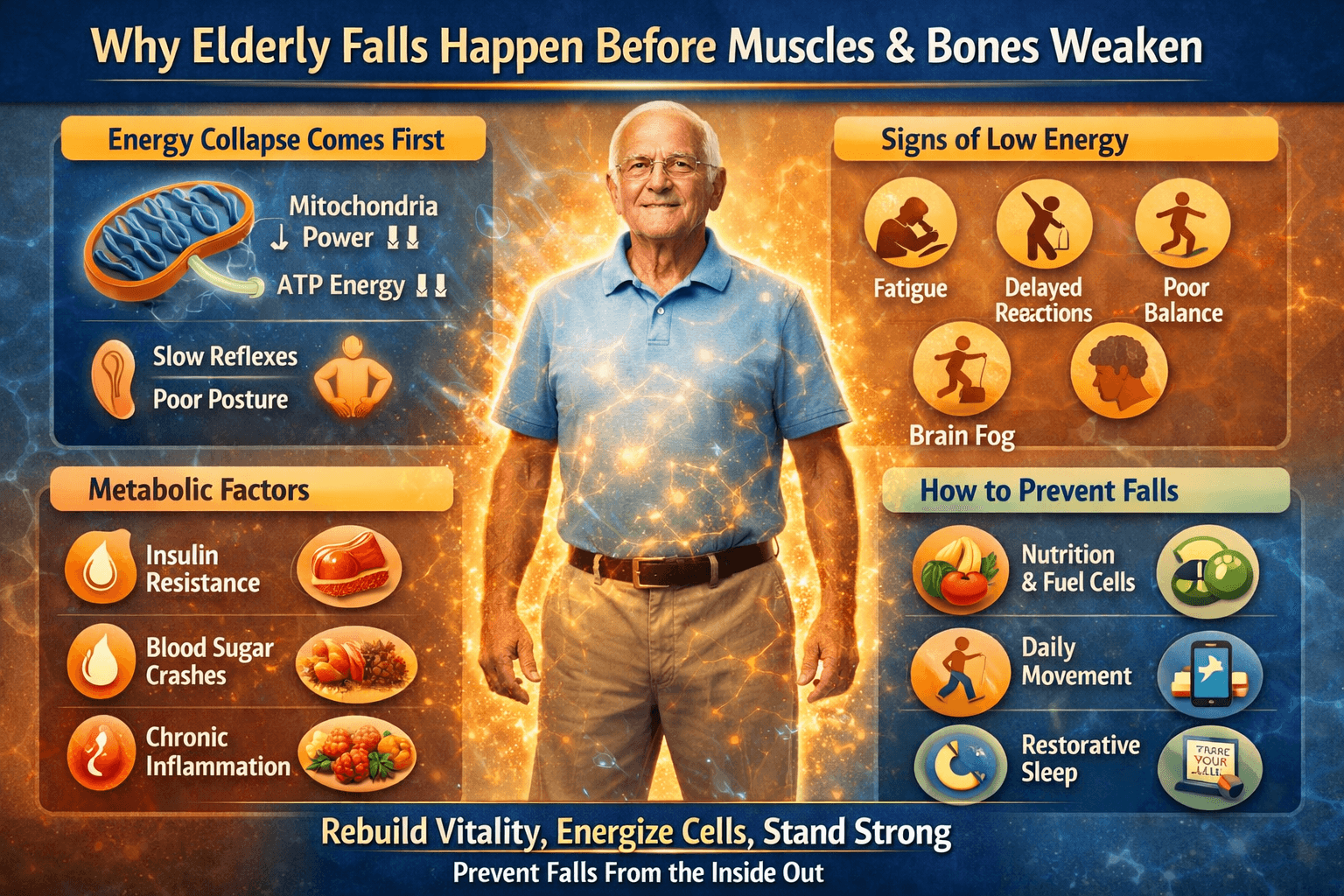
Why the Elderly Fall More: It’s About Energy Loss, Not Just Muscle or Bone
Falls are often blamed on aging muscles and thinning bones — but the real root cause goes much deeper. Before muscles weaken and bones thin, the body loses its ability to produce, sustain, and distribute energy at the cellular level. This energy collapse disrupts balance, reflexes, coordination, posture, and awareness — all critical to preventing falls.
The Hidden Energy Crisis Behind Falls
Many health discussions focus on sarcopenia (muscle loss) or osteoporosis (bone loss), but emerging gerontology research points to cellular energy dysfunction as a major contributor to fall risk.
In a recent study published in The Journals of Gerontology, Series A, researchers found that elderly adults with lower skeletal muscle energetics — including decreased mitochondrial oxygen consumption — had a significantly higher likelihood of recurrent falls, independent of muscle strength alone.(OUP Academic)
ATP: The Energy Molecule That Keeps Us Upright
Cells fuel movement and reflexes with adenosine triphosphate (ATP), generated inside mitochondria — the cell’s energy factories. Standing up, walking, adjusting posture, and reacting to a slip all depend on ATP. When mitochondrial efficiency drops with age, less ATP is produced, leading to fatigue, slower reaction times, and poorer balance. Research links diminished mitochondrial function with reduced mobility in older adults, suggesting energy shortfalls may precede sarcopenia-related symptoms.(OUP Academic)
Metabolic Dysfunction, Fatigue & Fall Risk
Age‑related metabolic changes such as insulin resistance, blood sugar crashes, chronic inflammation, and oxidative stress further impair energy metabolism. A 2024 review on metabolic dysfunction and physical frailty noted that mitochondrial ATP production is central to mobility, and its decline can make older adults more vulnerable to falls, frailty, cognitive decline, and hospitalization.(PubMed)
When cells can’t generate enough energy, posture control falters, reflexes slow, and the brain receives weaker signals — making simple balance tasks more dangerous.
Reflexes, Focus & the Brain
Neuromuscular signaling slows with age. It’s not just weaker muscles — it’s a slowing of the signals the brain sends to muscles that compromises reflex responses. Lower ATP availability directly affects this communication, meaning the elderly may misjudge their environment or react too slowly to correct balance.(OUP Academic)
Energy Decline Happens Before Muscle Loss
According to the same gerontology research, reduced mitochondrial function and impaired energy metabolism often appear before significant muscle loss. This supports the idea that falls are not simply a result of visible muscle weakness — they begin with an internal energy deficit.(OUP Academic)
Fueling the Body at the Cellular Level
True fall prevention must go beyond strength training or bone health. It starts with energizing cells and restoring metabolic function:
-
Fuel Cells With Nutrition: Balanced meals support ATP production and metabolic flexibility.
-
Daily Movement: Regular activity encourages mitochondria to remain efficient and responsive.
-
Restore & Recharge: Quality sleep allows cellular repair and energy restoration.
-
Track Your Health Metrics: Monitoring glucose, inflammatory markers, sleep, and movement patterns can reveal early energy collapse before physical symptoms appear.
When Cells Are Energized, the Body Stands Firm
When cellular energy systems operate well, coordination, posture, reflexes, and awareness stay strong — even in older adults. But when energy collapses, gravity wins. The body becomes slower and more vulnerable to slips, trips, and falls.
Key Takeaway:
Elderly falls don’t stem solely from age, muscle weakness, or thin bones — they are a symptom of declining cellular energy. Focusing on metabolic vitality, mitochondrial health, and consistent energy production offers a more effective strategy for preventing falls and maintaining independence.
Academic References (Gerontology Research Sources)
-
A 2024 Journals of Gerontology study reported that older adults with lower mitochondrial energetics had a higher risk of recurrent falls, even after accounting for strength and activity levels.(OUP Academic)
-
Research linking mitochondrial dysfunction with reduced mobility and impaired gait supports the idea that energy production deficits contribute to balance issues.(OUP Academic)
-
A 2024 review on aging and metabolic dysfunction described how mitochondrial ATP generation is essential for physical function and its decline can underlie frailty, fatigue, and falls.([PubMed](https://pubmed.ncbi.nlm.nih.gov/38400874/
-
"Metabolic dysfunction and the development of physical frailty: an aging war of attrition - PubMed"))
Medical Disclaimer
This article is for educational purposes only and does not constitute medical advice.
Scoliosis varies significantly between individuals. Always consult a qualified healthcare professional before starting any new sport or exercise program, especially if you have scoliosis, spinal conditions, pain, or previous injuries. Participation in sports should be guided by individual assessment and professional recommendation.
Copyright & Content Protection Notice
© 2026 All Well Scoliosis Centre. All rights reserved.
This content is original and protected by copyright law.
No part of this article may be reproduced, distributed, copied, or reused in any form without prior written permission. Unauthorized use, duplication, or content scraping is strictly prohibited.