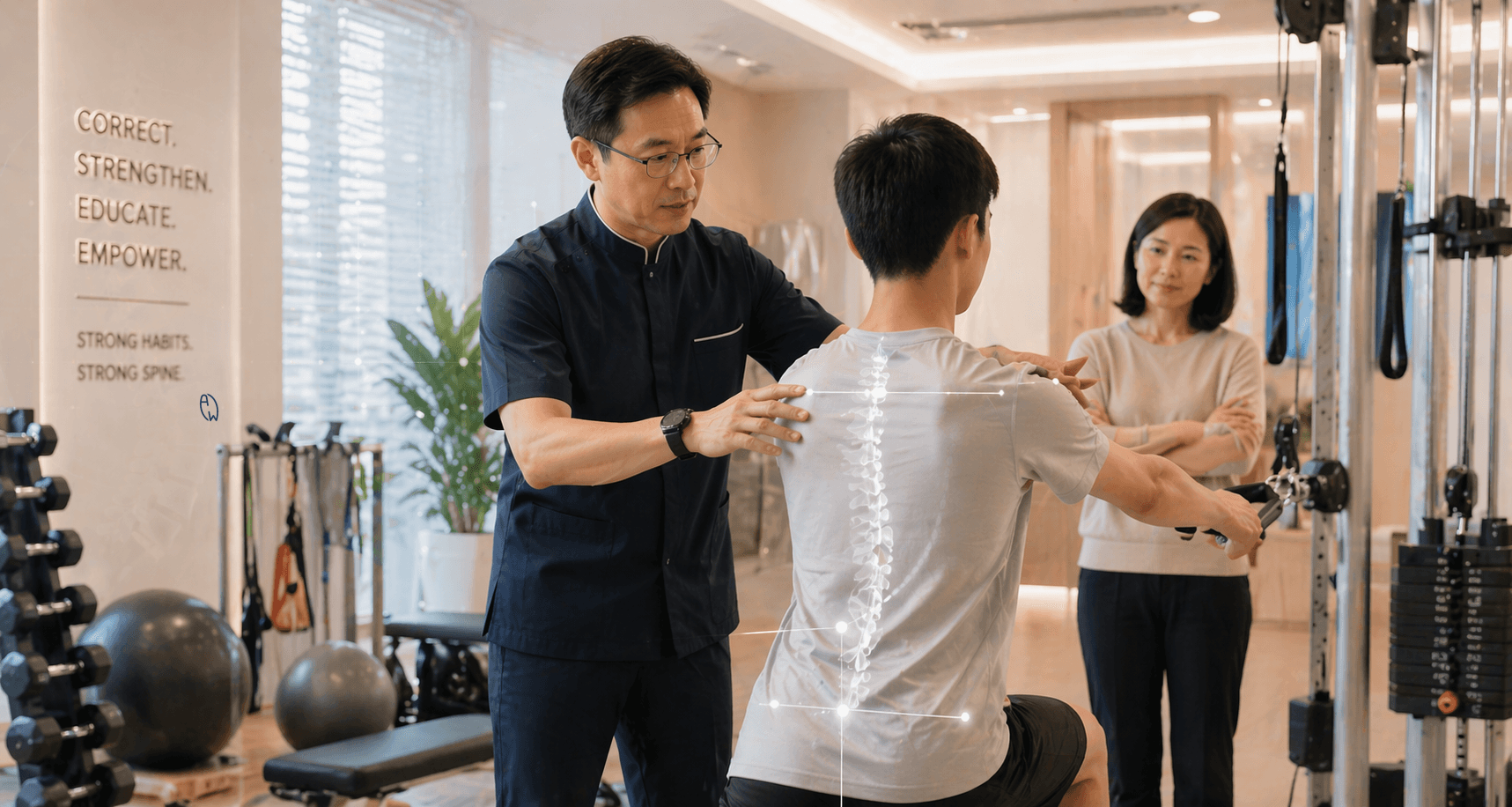
Structured Scoliosis Coaching Approach: A Guided Path to Lasting Spinal Correction
In my work with scoliosis patients, I do not approach care as a series of isolated treatments. I approach it as a structured coaching process. Me and my team are not simply providing therapy—we are guiding a long-term correction journey that requires understanding, consistency, and responsibility from both the patient and the family.
Scoliosis is not a condition that improves through occasional effort. It is shaped by daily habits, posture, movement patterns, and compliance outside the clinic. Because of this, passive treatment alone is not sufficient. What is needed is structured guidance, clear expectations, and consistent reinforcement over time.
Many families initially expect scoliosis care to be something that is “done for the child.” However, real correction cannot work that way. The body must be trained, habits must be corrected, and the patient must learn how to control their own movement patterns. Without this, improvements tend to be temporary or inconsistent.
For this reason, I position me and my team as coaches rather than passive service providers. We teach, correct, monitor, and guide every step of the process. We do not simply deliver treatment—we build understanding and accountability.
In some family cultures, especially where strong care and protection are deeply valued, I often observe a natural tendency for parents to be highly accommodating when their child struggles with rehabilitation routines. This is understandable and comes from love. However, in scoliosis care, over-adjusting routines too frequently can unintentionally reduce consistency, which is essential for progress.
In rehabilitation, structure is essential. My role includes guiding parents to move from reactive adjustments toward supportive consistency. The goal is not to be rigid, but to create a stable environment where the child can succeed through repetition and discipline in movement.
Me and my team also work closely with parents to ensure they understand their role clearly. We reinforce that they are not bystanders, but part of the rehabilitation system. When parents are consistent at home, outcomes improve significantly. When structure is lost at home, progress in the clinic is often reduced.
Our responsibility does not end with treatment sessions. We actively coach movement patterns, correct posture habits, ensure exercise compliance, and provide continuous feedback. We also educate patients and families so they understand not just what to do, but why it matters. This understanding is what transforms short-term compliance into long-term change.
Some may describe this approach as demanding. I see it differently. It is structured care designed for long-term correction. Without structure, scoliosis management becomes uncertain. With structure, the body develops stability, the patient gains control, and the family gains clarity.
The word “doctor” originates from the Latin docere, meaning “to teach.” This principle is central to my practice. A doctor is not only a provider of treatment, but also an educator. Without teaching, treatment depends entirely on the clinic. With teaching, the patient gains independence.
This is the foundation of my philosophy.
Ultimately, scoliosis correction is not achieved through comfort alone. It is achieved through consistent guidance, disciplined practice, and informed participation from both patient and parent. Me and my team are committed to providing that structure—clear, supportive, and always focused on long-term spinal stability rather than temporary relief.